In the dynamic cannabis industry, where rapid growth often comes at an environmental cost, the demand for sustainable products has become the defining trend of the era. Gone are the days when quality and price were the only considerations. Today, the most informed consumers and forward-thinking businesses are asking crucial questions: How does the cannabis industry achieve sustainability? Is my purchase supporting harmful practices or a greener future?
This guide provides the answers. It is your definitive resource for navigating the 2026 marketplace, where sustainable farming, eco-friendly packaging, and blockchain traceability are not just buzzwords but essential pillars of responsible consumption and brand loyalty.
Beyond Greenwashing: Why 2026 is the Year of Authentic Cannabis Sustainability
The journey toward a sustainable cannabis industry is complex, involving every step from seed to sale. While the sector’s rapid expansion has brought economic benefits, it has also highlighted significant environmental challenges, particularly in large-scale indoor cultivation known for its high energy and water use. The industry is now at a pivotal moment, driven by a convergence of consumer demand, regulatory evolution, and technological innovation.
In 2026, sustainability in cannabis is undergoing a critical maturation. It’s moving beyond simple “green” marketing claims toward verifiable, data-backed practices. Major regulatory shifts, such as the anticipated federal rescheduling of cannabis in the United States, are poised to unlock new investments and standardize environmental expectations. Concurrently, sophisticated technologies like blockchain for supply chain transparency are providing the tools to prove ethical and ecological claims. This guide delves into the actionable strategies and verified solutions that define true sustainability, empowering you to make choices that benefit both your well-being and the planet.
The 2026 Sustainability Blueprint: Cultivation, Packaging & Transparency
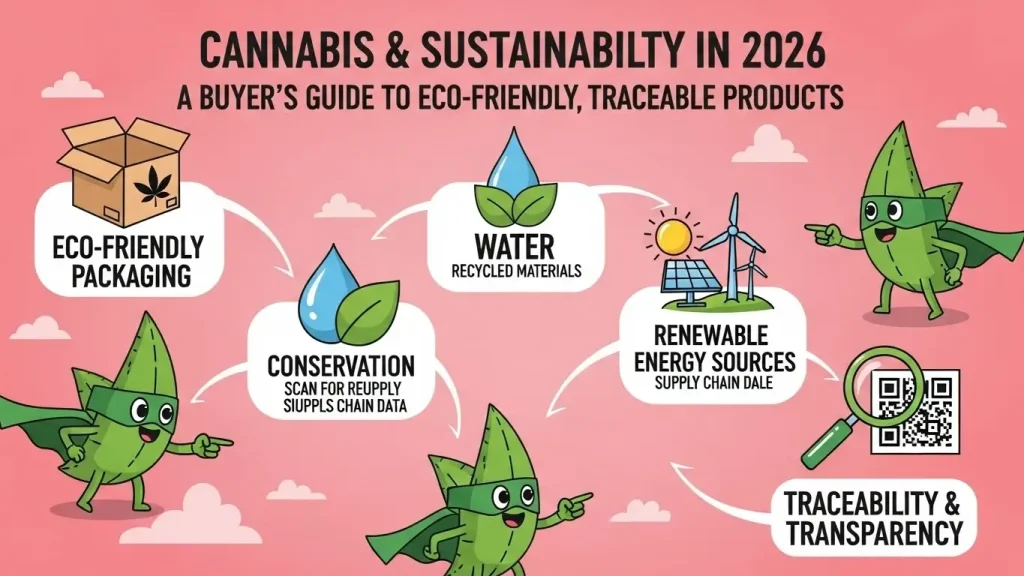
Achieving a genuinely sustainable cannabis plant requires a holistic approach. It’s a system where environmentally sound cultivation, responsible packaging, and complete transparency work in concert. Let’s break down the core components that leading brands and growers are adopting in 2026.
Eco-Conscious Cultivation: Building from the Ground Up
The foundation of any sustainable product is how it is grown. Sustainable cannabis farming focuses on regenerating the environment rather than depleting it. Key practices include:
- Water Conservation and Smart Irrigation: With water scarcity a global concern, leading growers employ drip irrigation systems and rainwater harvesting to drastically reduce usage. Advanced sensors monitor soil moisture to deliver water only when and where needed, preventing waste.
- Soil Health and Organic Practices: Healthy soil is a living ecosystem. Sustainable cultivation prioritizes organic farming, avoiding synthetic pesticides and fertilizers in favor of natural compost and cover crops. This not only produces a cleaner flower but also sequesters carbon and improves biodiversity.
- Energy Efficiency and Renewables: For indoor operations, energy is the largest environmental footprint. The 2026 standard involves a full transition to energy-efficient LED lighting and the integration of solar or wind power where possible. These steps significantly lower the carbon footprint of production.
- Innovative Growing Media: Technology plays a key role. Products like fabric grow bags promote healthier root development through air pruning, which prevents root circling and leads to more efficient water and nutrient uptake. Similarly, stone wool substrates allow for precise control in soilless systems, minimizing resource use.
Sustainable Packaging: The Circular Economy on the Shelf
Once the cannabis is cultivated sustainably, it must be housed responsibly. Cannabis packaging in 2026 is a critical touchpoint for brand values and environmental action.
- Material Innovation: The shift is toward biodegradable materials (like hemp-based plastics or mushroom packaging) and post-consumer recycled (PCR) content. For example, some fabric grow bags are now made from recycled plastic bottles, closing the waste loop.
- Design for Reuse and End-of-Life: The best packaging is designed with its entire lifecycle in mind. This includes reusable glass jars or metal tins, and packages designed for easy consumer recycling. Minimalist design principles reduce material use overall.
- Compliance Meets Conservation: It’s crucial that eco-friendly packaging still meets stringent state legal requirements, which often mandate child-resistant features and opaque or UV-blocking materials to protect the product’s potency. The innovation lies in meeting these mandates with sustainable materials.
The Transparency Imperative: Blockchain & Traceability
Knowing a product’s journey is the ultimate test of its sustainability claims. In 2026, blockchain technology is the gold standard for supply chain transparency.
How It Works for You:
When you scan a QR code on a package, blockchain retrieves an immutable record from a secure, decentralized ledger. This isn’t a marketing webpage; it’s a verified digital log that tracks every critical step.
What You Can Verify:
- Origin & Cultivation Practices: See the farm location, cultivation methods (organic, sunlight-grown), and harvest date.
- Third-Party Lab Results: Access unalterable certificates of analysis (COAs) for potency and contaminants like pesticides and heavy metals.
- Environmental Metrics: Progressive brands are adding data points on water usage, energy source, and carbon footprint for that specific batch.
- Supply Chain Integrity: Ensure the product was handled properly and never diverted to the illicit market, a key concern for regulators and consumers alike.
This level of traceability builds unparalleled trust. It allows you to “vote with your wallet” for growers who invest in sustainable practices and holds the entire industry to a higher standard of accountability.
The table below summarizes the key pillars of a sustainable cannabis product and what to look for as a buyer:
| Sustainability Pillar | Core Objective | What to Look For in 2026 |
|---|---|---|
| Eco-Conscious Cultivation | Minimize environmental impact at the source. | Sun-grown/light-deprivation greenhouses, organic certifications, renewable energy use, water recycling systems. |
| Responsible Packaging | Eliminate single-use waste and promote circularity. | Biodegradable/compostable materials, high PCR content, reusable formats, minimalist design. |
| Full-Supply Chain Transparency | Provide verifiable proof of ethical and sustainable claims. | Blockchain-powered QR codes, seed-to-sale tracking, access to farm-level data and immutable lab results. |
The Business Case: Why Sustainability Drives Market Success in 2026
Adopting robust sustainable practices is no longer just an ethical choice for cannabis businesses—it’s a powerful commercial strategy with a clear return on investment (ROI). In the crowded 2026 marketplace, sustainability is a key differentiator that drives customer acquisition, loyalty, and lifetime value (LTV).
- Meeting Surging Consumer Demand: A significant and growing segment of consumers, particularly Millennials and Gen Z, actively seek out brands that align with their values. They are willing to pay a premium for products that are organic, eco-friendly, and transparently sourced. A brand’s commitment to sustainability directly translates to higher conversion rates and customer retention.
- Future-Proofing Against Regulation: As the industry matures, stricter environmental regulations are inevitable. Companies that proactively integrate sustainable farming and packaging solutions are ahead of the compliance curve, avoiding costly retrofits and potential fines. This proactive approach de-risks the business and ensures long-term operational stability.
- Enhancing Brand Equity and Trust: In an industry where trust is paramount, blockchain traceability is a game-changer. By offering immutable proof of a product’s origin, safety, and sustainability, brands build an unshakable reputation for integrity. This trust fosters powerful brand advocacy, turning customers into loyal evangelists.
Your Action Plan: How to Be a Sustainable Cannabis Consumer in 2026
Your purchasing power shapes the industry. Here is your actionable checklist for making eco-friendly, traceable choices:
- Interrogate the Source: Don’t just buy a strain; buy a story. Ask your budtender or research online: Is it sun-grown or indoor (and if indoor, what’s the energy source)? Are organic practices used? Support brands that provide this information upfront.
- Decode the Packaging: Examine the container. Is it overly complex with plastic inserts? Look for recyclable materials (like glass or certain plastics), PCR content labels, or biodegradable claims from reputable certifications.
- Scan for Truth: Always scan the QR code. A link to a simple brand website is a red flag. Look for a traceability interface that shows detailed batch information, lab results, and cultivation notes. This is your proof of transparency.
- Support the Innovators: Champion brands that are leaders in sustainability—those using carbon-neutral shipping, plastic-negative packaging, or funding environmental projects. Your support accelerates industry-wide change.
- Practice Sustainable Consumption: Extend sustainability to your own use. Consider low-temperature vaporization to reduce carbon emissions compared to smoking. Reuse or properly recycle your packaging.
Conclusion: The Future is Green and Accountable
The path to a truly sustainable cannabis industry is a continuous journey, but 2026 marks a decisive turn toward integration and accountability. The solutions—from water-saving irrigation and soil-regenerative practices to circular packaging and bulletproof blockchain verification—are now operational and scalable.
The power to accelerate this future lies with you, the informed buyer. By demanding traceability, rewarding eco-friendly innovation, and supporting brands that embed sustainability into their core DNA, you do more than just enjoy a quality product. You invest in a healthier ecosystem, a more ethical supply chain, and a resilient industry built for the long term. The most potent choice you can make is to choose consciously. Let your next purchase be a vote for a greener world.
Frequently Asked Questions (FAQs)
How does the cannabis industry achieve sustainability?
The cannabis industry achieves sustainability through a multi-faceted approach at every stage of production. This includes adopting sustainable cultivation methods like water-efficient irrigation, organic farming, and using renewable energy. It also involves shifting to eco-friendly, biodegradable, or recyclable packaging and implementing technologies like blockchain for full supply chain transparency, allowing consumers to verify environmental and ethical claims.
Does cannabis have a sustainability problem?
Yes, historically and at scale, conventional cannabis farming can pose sustainability challenges. Large-scale indoor cultivation has been associated with high energy consumption for lighting and climate control, significant water use, and potential for soil degradation and chemical runoff from non-organic practices. The industry is now actively addressing these issues with innovative solutions.
How can a cannabis plant be sustainable?
A cannabis plant itself can be part of a sustainable system based on how it is grown. Practices like using organic nutrients, cultivating in living soil that captures carbon, employing water conservation techniques like drip irrigation, and utilizing natural sunlight or energy-efficient LED lights all contribute to growing a sustainable cannabis plant. The plant’s potential as a bio-accumulator also means clean growing conditions are essential.
Is cannabis farming sustainable?
Cannabis farming can be sustainable when it employs regenerative and eco-conscious practices. Sustainable cannabis farming minimizes environmental impact by focusing on soil health, biodiversity, water conservation, and energy efficiency. The use of sustainable cultivation media like fabric grow bags that improve root health and resource uptake is one example of how farming practices are evolving to meet higher sustainability standards.