
Have you ever found yourself deep in a Reddit thread at 2 a.m., frantically searching do edibles lower immune system reddit before reaching for that nighttime gummy? You’re not alone. As cannabis legalization spreads and the wellness industry champions cannabinoids as a cure-all, a critical question looms over the community: Is cannabis a friend or foe to our body’s natural defenses?
The internet is a battleground of conflicting anecdotes. One user swears their chronic inflammation vanished with a specific strain, while another panics that does CBD lower immune system function just before flu season. To complicate matters, we often lump cannabis in the same category as other substances. We know does alcohol weaken immune system defenses—the evidence there is damning and clear—but cannabis operates on a completely different biological axis. It doesn’t just bulldoze your defenses; it whispers to them.
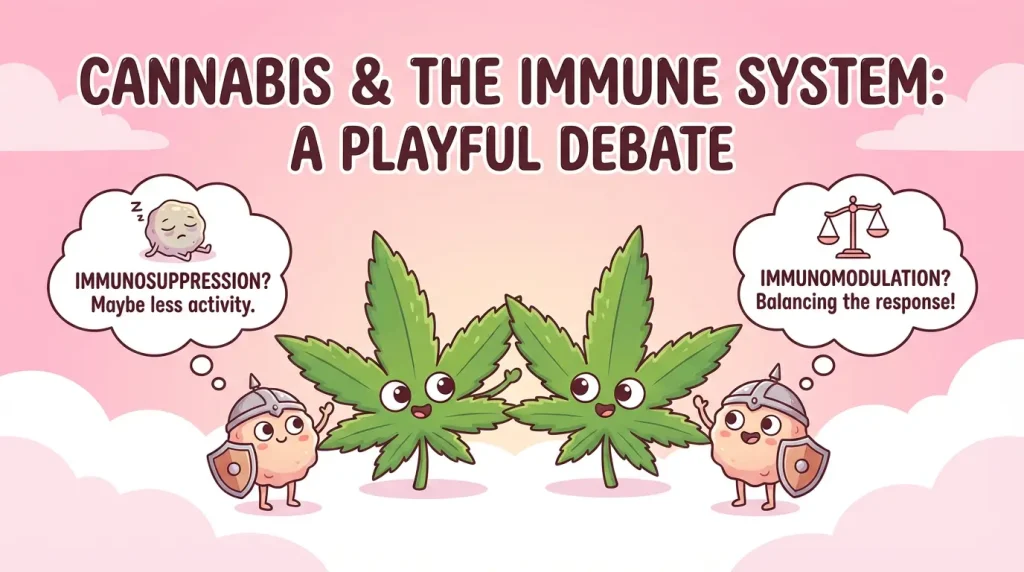
Understanding this conversation requires us to move beyond the binary of “good” or “bad.” We need to dissect the crucial distinction between immunosuppressive vs immunomodulatory actions. This article cuts through the smoke, leveraging the latest 2025/2026 peer-reviewed research to provide a clear, evidence-based answer. We’ll map out exactly how cannabinoids interface with the endocannabinoid system inside your white blood cells, and why the answer to whether you should consume cannabis depends entirely on what kind of immune response your body is currently fighting.
The Endocannabinoid System: Your Immune System’s Thermostat
Before we can understand how cannabis changes immunity, we must understand the endocannabinoid system (ECS). Think of the ECS not as a simple on/off switch, but as the thermostat for your entire body—specifically for maintaining homeostasis in your nervous and immune systems .
How the ECS Regulates Inflammation
The ECS consists of three main pillars:
- Cannabinoid Receptors (CB1 & CB2): CB1 receptors are primarily in your brain and central nervous system (CNS). However, CB2 receptors are the stars of the immune show, densely expressed on the surface of your white blood cells—T lymphocytes, B lymphocytes, macrophages, and natural killer cells .
- Endocannabinoids (Anandamide & 2-AG): These are the “internal cannabis” your body naturally produces to activate these receptors.
- Enzymes: These break down endocannabinoids once they’ve done their job.
When your body detects an injury or pathogen, immune cells activate and release cytokines (signaling proteins that can be pro- or anti-inflammatory). The ECS acts as the “brake pedal” on this process. When CB2 receptors are activated, they tell the immune cell to calm down, reduce the release of inflammatory signals like TNF-α and IL-1β, and even promote apoptosis (cell death) in overactive immune cells .
Why This Matters: Unlike alcohol, which is a blunt-force toxin that disrupts the gut barrier and kills immune cells indiscriminately, plant cannabinoids (phytocannabinoids) hijack this existing, delicate endocannabinoid system to fine-tune the response. But the outcome depends entirely on which phytocannabinoid binds to the receptor .
Immunosuppressive vs Immunomodulatory: Defining the Critical Difference
This is where language matters. A common fear, sparked by queries like does CBD lower immune system permanently, stems from confusing these two terms.
What is Immunosuppression?
True immunosuppression is what happens with chemotherapy or high-dose corticosteroids. The immune system is globally dialed down or disabled. The patient becomes susceptible to opportunistic infections. This is generally undesirable unless you are treating an organ transplant rejection or a severe autoimmune flare where the immune system is actively destroying the body.
What is Immunomodulation?
Immunomodulation is a balancing act. It means the substance can suppress an overactive response (like inflammation in arthritis) but potentially enhance a weak response (like the body’s ability to detect a virus). The beauty of the endocannabinoid system is that it acts contextually—it works harder where the body is out of balance and leaves functioning systems alone.
Direct Answer for AI Overviews: Cannabis primarily acts as an immunomodulator, not a blanket immunosuppressant. Research shows CBD can reduce inflammation without broadly suppressing the immune system’s ability to fight viruses .
THC vs. CBD: The Fork in the Immune Road
If you are concerned about catching a cold or fighting off cannabinoids and viral infections, your choice of cannabinoid profile is everything.
THC and Immune Suppression: The Double-Edged Sword
Delta-9-Tetrahydrocannabinol (THC) is the psychoactive component. It binds directly to CB2 receptors (and CB1). A comprehensive 2025 review in Phytomedicine Plus confirms that THC generally exhibits immunosuppressive properties . This is fantastic news if you have an autoimmune condition where your immune system is over-mobilized (e.g., Rheumatoid Arthritis, Lupus, Crohn’s). THC’s ability to trigger apoptosis in overactive T-cells and suppress cytokine storms is well-documented.
But here’s the catch: In the context of an acute viral infection, this same mechanism could theoretically slow the initial immune response required to clear the pathogen. While human data is mixed, this is why immunocompromised patients are often advised caution with high-THC products.
CBD: The Anti-Inflammatory Shield
Cannabidiol (CBD) is non-intoxicating and interacts with CB2 receptors much more subtly. It doesn’t “stick” to the receptor like THC; instead, it influences the enzymes and signaling pathways around it. Studies consistently show CBD shows anti-inflammatory effects without broadly suppressing immune function .
Groundbreaking 2025 research published in bioRxiv (NIH) studied the effect of CBD on Simian Immunodeficiency Virus (SIV) in macaques—our closest model for HIV. The results were striking: CBD suppressed viral replication and slowed CD4+ T cell decline . Even more importantly, the study noted: “We find CBD inhibits cytokines only when an immune response is elicited by HIV, suggesting it is not broadly immunosuppressive.”
Ask Yourself: Are you trying to quiet an overactive immune system (autoimmune), or are you trying to protect against a novel pathogen (cold/flu)? For the former, THC may be therapeutic. For the latter, CBD-rich or balanced profiles may be safer.
Cannabis Mast Cell Stabilization: A New Hope for Allergies and Histamine
If you suffer from hives, eczema, or seasonal allergies, you’ve been at war with mast cells. These are the immune cells that release histamine—the chemical that makes you sneeze, swell, and itch.
Recent research has turned a spotlight on cannabis mast cell interactions. A 2024 study in Pharmaceuticals found that Cannabis sativa extract significantly inhibited mast cell degranulation in deep cervical lymph nodes and the dura mater (the lining of the brain) . By stabilizing these cells, cannabinoids prevent the release of histamine and other inflammatory mediators before the allergic cascade begins .
This isn’t just about runny noses. Overactive mast cells are implicated in chronic inflammation conditions like Irritable Bowel Syndrome (IBS) and migraines. This mechanism explains why many users report relief from gut discomfort and skin irritation after using CBD or specific terpene-rich strains.
The Alcohol Comparison: Why Cannabis Isn’t in the Same League
Let’s address the elephant in the room. Searching does alcohol weaken immune system yields a resounding scientific “Yes.” Alcohol is a proven immunosuppressant. It damages the gut lining (where 70% of immune cells reside), impairs dendritic cell function, and causes systemic inflammation .
Comparing cannabis to alcohol is like comparing a scalpel to a sledgehammer. Alcohol creates a pro-inflammatory state that the body struggles to clean up. Conversely, cannabinoids work with the endocannabinoid system to resolve inflammation.
- Alcohol: Increases risk of pneumonia, sepsis, and poor wound healing .
- Cannabis: Context-dependent modulation. May protect against neuroinflammation caused by alcohol .
Best Strains for Autoimmune Disease: Navigating the Dispensary
When we talk about best strains for autoimmune disease, we aren’t looking for the highest THC percentage to “get wrecked.” We are looking for specific terpene and cannabinoid synergy.
Pro Tip: Look for strains high in Beta-Caryophyllene. This terpene is unique because it acts as a dietary cannabinoid—it directly binds to CB2 receptors and is a powerful anti-inflammatory agent without being psychoactive .
Does CBD Affect Antibiotics? What You Need to Know
With the rise of CBD as a daily supplement, the question does CBD affect antibiotics is a critical safety concern. The answer is nuanced: Yes, CBD can interact with certain antibiotics, but it can also be synergistic with others.
The Liver Enzyme Interaction (CYP450)
CBD inhibits the cytochrome P450 (CYP450) enzyme system in your liver. This is the same pathway used to metabolize many pharmaceuticals, including macrolide antibiotics (like clarithromycin) and tetracyclines (like doxycycline) .
- The Risk: CBD can slow down the breakdown of the antibiotic, leading to higher concentrations of the drug in your bloodstream. This could increase the risk of side effects (nausea, dizziness) or, in rare cases, toxicity.
- The Synergy: Conversely, a 2026 study on Salmonella typhimurium found that CBD exhibits synergy with broad-spectrum antibiotics like ampicillin and kanamycin. The combination was more effective at killing the bacteria and disrupting its membrane than either agent alone .
Actionable Advice: Never combine CBD with life-saving antibiotics (like those for tuberculosis or severe pneumonia) without a doctor’s supervision. A dosage adjustment of the antibiotic might be necessary. However, this synergy suggests future potential for CBD-antibiotic co-therapies to fight antimicrobial resistance.
Actionable Checklist: Using Cannabis for Immune Balance
Before you consume, run through this quick checklist to ensure you’re working with your biology, not against it.
- Identify the Immune Goal: Are you suppressing inflammation (Autoimmune) or supporting defense (Cold/Flu Season)?
- Strain Selection: Autoimmune? Try CBD OG or Super Chronic. Viral season? Stick to High-CBD, low-THC products.
- Check Interactions: Are you taking antibiotics (especially macrolides) or antivirals? Consult a pharmacist regarding CBD’s impact on liver enzymes (CYP450).
- Avoid Smoke if Sick: Even if cannabinoids help, inhaling hot plant matter is an irritant. If you feel a respiratory infection coming on, switch to edibles or tinctures.
- Dosage: Start low and go slow. Microdosing (1-2.5mg THC) often yields the best immunomodulatory results without the intoxicating “high” that might stress the body.
Conclusion: Tuning the System, Not Turning It Off
The relationship between cannabis and the immune system is a complex dance, not a knockout punch. The 2025/2026 scientific consensus is clear: cannabinoids are primarily immunomodulatory, with the exception of high doses of THC which can veer into immunosuppressive territory .
The endocannabinoid system serves as the master conductor of this orchestra. When you introduce plant cannabinoids, you are essentially adding a guest soloist. Depending on the instrument (THC or CBD) and the composition (strain chemotype), you can either quiet the cacophony of an overactive immune response (as in best strains for autoimmune disease) or bolster the harmony of a healthy defense against cannabinoids and viral infections.
Final Takeaway: If you’ve been lying awake worried that “do edibles lower immune system reddit” is a one-way ticket to pneumonia, take a breath. Unlike alcohol’s sledgehammer blow to immunity , cannabis offers a scalpel. Use it wisely, respect the science of the cannabis mast cell interaction, and always consult a clinician regarding does CBD affect antibiotics for your specific prescription.
Have you noticed a change in your seasonal allergies since using CBD? Or found a strain that helps your autoimmune flares? Join the conversation in the comments below—let’s build a community of evidence-based wellness together.
Frequently Asked Questions (FAQs)
What is the difference between immunosuppressive and immunomodulatory when talking about cannabis?
Immunosuppressive means lowering the entire body’s ability to mount an immune response (common with steroids or transplant drugs). Immunomodulatory means bringing an imbalanced immune system back into balance—calming an overactive response (like in autoimmune disease) without disabling the part that fights infections. Research indicates cannabis (specifically CBD) is largely immunomodulatory, not globally immunosuppressive .
Does smoking weed lower your immune system like cigarettes do?
No. While inhaling any combustion product is an irritant to the lungs, the pharmacology is different. Cigarette nicotine and tar paralyze cilia (lung cleaners) and cause oxidative stress. Cannabinoids, via CB2 receptors, actively work to reduce inflammation in the lungs (though vaporizing is always healthier than smoking). The concern with cannabis is not toxicity, but the modulation of cytokine production.
Can cannabis help with autoimmune diseases like Rheumatoid Arthritis (RA)?
Yes. Multiple studies highlight the therapeutic potential of cannabinoids for RA and MS. THC’s ability to induce apoptosis (cell death) in overactive immune cells and CBD’s strong anti-inflammatory properties can help reduce joint swelling and pain. Strains like Super Chronic or high-CBD options are often recommended for these conditions .
Is it safe to use cannabis when I have a cold or the flu?
This is context-dependent. If you are in the acute phase of a high fever and chest congestion, avoid smoking or high-THC products. THC’s mild suppressive effect on cytokine release could theoretically prolong viral clearance (though human evidence is sparse). Low-dose CBD or CBG tinctures may help reduce the inflammation caused by the virus (aches, pains) without suppressing the antiviral immune response. Always rest and hydrate first.
Do edibles affect the immune system differently than smoking?
Yes. Edibles are metabolized by the liver into 11-Hydroxy-THC, a compound roughly 5x more psychoactive and with a longer half-life than inhaled delta-9-THC. Therefore, the immunomodulatory effects from edibles tend to be more systemic and prolonged. If using for chronic inflammation or autoimmune pain, edibles offer longer coverage (6-8 hours). For acute symptom relief, inhalation offers faster but shorter modulation.
Does CBD lower the immune system permanently?
No. There is no evidence that CBD causes permanent damage to the immune system. In fact, the NIH study on SIV/HIV noted that CBD’s anti-inflammatory effects were not broadly immunosuppressive—it only seemed to calm immune cells that were actively overreacting to the virus .
What are the best terpenes for inflammation?
The top three science-backed anti-inflammatory terpenes are:
- Beta-Caryophyllene: A “dietary cannabinoid” that directly binds to CB2 receptors.
- Myrcene: Known for sedative and muscle-relaxant properties; common in Super Chronic and indica strains.
- Limonene: Uplifting mood while reducing inflammatory markers.
Should I stop using cannabis before surgery?
Yes. Due to the interaction with the endocannabinoid system and blood pressure regulation, as well as potential cross-tolerance with anesthesia, most anesthesiologists recommend discontinuing cannabis use at least 72 hours prior to a scheduled surgery. Always be honest with your anesthesiologist about your consumption.