
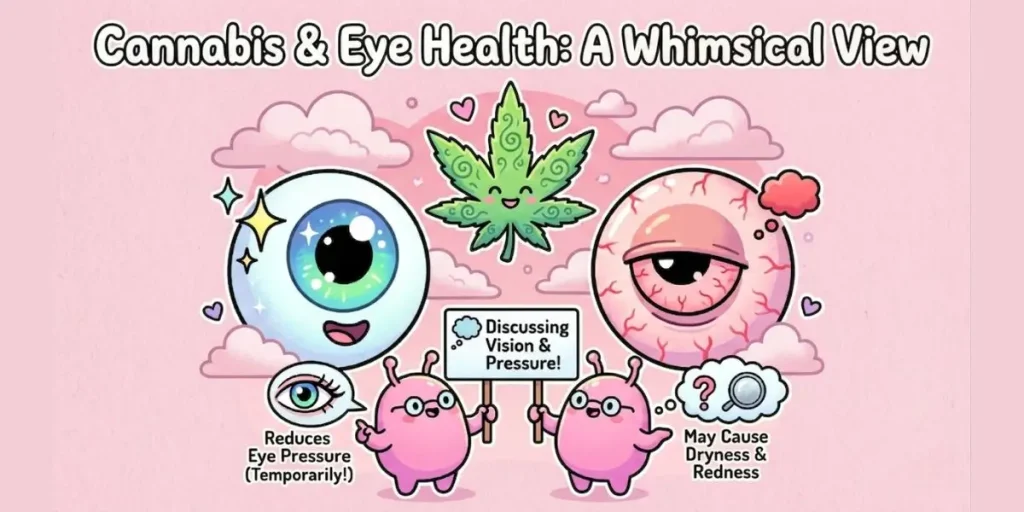
You finish a session, glance in the mirror, and there they are—those telltale red eyes staring back at you. But beyond the cosmetic inconvenience, have you ever stopped to wonder what’s actually happening inside your eyes when you consume cannabis? Cannabis and eye health is a topic swimming in half-truths, forum anecdotes, and outdated assumptions.
Maybe you’ve heard that weed “cures” glaucoma. Or perhaps you’ve experienced blurry vision after an edible and panicked slightly. Does smoking damage your eyes long-term? Is there really such a thing as cannabis eye drops that work? These aren’t just stoner shower thoughts—they’re legitimate medical questions with real consequences for your vision.
The truth sits at a complicated crossroads. On one hand, research confirms THC reliably lowers intraocular pressure—the primary modifiable risk factor for glaucoma—for a few hours . On the other hand, CBD, the “healthy” cannabinoid everyone puts in their morning latte, may actually increase eye pressure in some cases . Confused yet? You should be.
Here’s what we’re going to unpack today: the real relationship between cannabis and eye health, which cannabinoid actually matters for glaucoma (spoiler: it’s not CBD), why edibles and eyesight changes sometimes go hand in hand, and what “stoner eyes” actually reveal about your endocannabinoid system. No bro-science. No fear-mongering. Just evidence-based answers.
Have you ever noticed your vision getting slightly hazy after consuming cannabis and wondered if it’s normal? Keep reading—we’re about to explain exactly why that happens.
What “Stoner Eyes” Actually Are
Let’s address the elephant in the room—or rather, the bloodshot elephant in your eye socket. What are stoner eyes? The term refers to the distinctive red, glassy, sometimes slightly droopy appearance that follows cannabis consumption. It’s arguably the most famous side effect of getting high, immortalized in countless movies and the reason eye drops were invented (well, one of the reasons).
What do stoner eyes look like? Clinically speaking, you’re looking at:
- Conjunctival hyperemia: Fancy medical speak for dilated blood vessels on the white part of your eye (the sclera). When THC hits your bloodstream, it triggers vasodilation—your blood vessels widen. The capillaries in your eyes are particularly visible because the sclera provides a bright white backdrop .
- Ptosis: A subtle drooping of the upper eyelid. It’s not dramatic enough to impair vision, but it contributes to that “sleepy” or “relaxed” look.
- Mydriasis: Pupil dilation (more on this shortly).
- Reduced blink rate: Cannabis can decrease tear production, leading to dryer eyes that appear less “bright.”
Here’s what’s fascinating: the redness isn’t from smoke irritation. Plenty of people assume edibles and eyesight changes—or eye redness—won’t happen because there’s no smoke involved. Wrong. Edibles can absolutely make your eyes red. The mechanism is systemic. THC enters your bloodstream whether you inhale it or digest it. Once circulating, it lowers blood pressure and dilates those ocular capillaries regardless of the consumption method .
Why do some people get redder eyes than others?
- THC potency matters: Higher-THC products cause more pronounced vasodilation.
- Personal biology: Your baseline blood pressure, melanin levels (darker irises can mask mild redness), and genetic variations in cannabinoid receptor density all play a role.
- Tolerance: Chronic users often report less noticeable redness over time.
Quick win for managing redness: Over-the-counter vasoconstrictor eye drops (containing tetrahydrozoline or naphazoline) work by temporarily constricting those dilated blood vessels. But here’s the catch—use them sparingly. Rebound redness (where your eyes become even redder when the drops wear off) is real. Lubricating drops (artificial tears) are safer for frequent use.
Cannabis Effects on Pupils: More Than Meets the Eye
Cannabis effects on pupils represent one of the more subtle but scientifically interesting ocular responses to cannabinoids. Unlike opioids, which famously cause “pinpoint pupils,” cannabis typically causes mydriasis—pupil dilation.
Research dating back decades confirms this effect. Animal studies demonstrated that THC produces dose-dependent mydriasis (pupil dilation), and this appears to be centrally mediated—meaning it originates in the brain rather than from direct action on the eye itself . When researchers administered THC directly into the cerebral ventricles of rats, they observed pupil dilation at doses less than 3% of what was required systemically.
What does this mean for you practically?
- Dilated pupils allow more light to enter the eye, which can contribute to photophobia (light sensitivity)—ever notice how bright everything seems after smoking?
- In low-light conditions, dilated pupils might briefly improve night vision, but this effect is offset by other cannabis-induced visual changes (reduced contrast sensitivity, slower dark adaptation).
- Dilated pupils can make you look “altered” even if you feel completely functional.
Does pupil dilation from cannabis affect eye pressure? Interestingly, the mechanisms appear linked. The same sympathetic nervous system activation that dilates pupils may also influence intraocular pressure reduction. Studies show that blocking the sympathetic pathway (via sympathectomy) inhibits both the pupil-dilating and pressure-lowering effects of THC . This suggests a shared mechanism involving the autonomic nervous system.
Have you noticed your eyes feeling more sensitive to bright lights after consuming cannabis? That’s your dilated pupils at work—consider sunglasses your friend, even indoors if you’re trying to be subtle.
How Does Smoking Affect Your Eyes?
How does smoking affect your eyes beyond the immediate redness? This question deserves a nuanced answer because the route of administration creates distinct effects that edibles and tinctures don’t share.
Immediate Effects (Smoking/Vaping Specifically)
When you inhale cannabis, THC reaches peak blood concentration within minutes. This rapid onset produces several acute ocular changes:
- Intraocular pressure drops: A 25-30% reduction in IOP occurs within 60-90 minutes and lasts approximately 3-4 hours . This is the basis for glaucoma-related interest in cannabis.
- Blood vessel dilation: The capillary expansion that causes redness peaks alongside THC blood levels.
- Tear film disruption: Smoke is a direct irritant to the ocular surface. Even if you don’t feel it, smoke exposure reduces tear breakup time and can exacerbate dry eye symptoms.
- Corneal sensitivity changes: The cornea (the clear front surface of your eye) contains CB1 receptors. Smoke exposure may temporarily alter corneal nerve sensitivity.
Chronic Smoking Concerns
While occasional cannabis smoking hasn’t been definitively linked to permanent eye damage, heavy chronic use raises some concerns:
- Dry eye disease: A 2024 narrative review in Clinical Ophthalmology identified dry eye syndrome as a documented adverse effect associated with cannabis use . The mechanism likely involves both CB1 receptor activation in lacrimal glands (affecting tear production) and smoke-related surface irritation.
- Neuroretinal dysfunction: Some studies suggest chronic heavy cannabis use may affect retinal ganglion cell function, though the clinical significance remains unclear .
- Contrast sensitivity: Research indicates cannabis can impair binocular and monocular contrast sensitivity—essentially your ability to distinguish objects from their backgrounds in low-contrast situations . This has obvious implications for night driving.
Important distinction: Many of these concerns relate specifically to smoking, not necessarily to cannabis itself. Combustion creates numerous compounds beyond cannabinoids—particulates, carbon monoxide, and various irritants—that affect ocular surface health independently of THC.
If you’re concerned about eye health but continue to use cannabis, consider:
- Switching to vaporization (reduces combustion byproducts)
- Using lubricating eye drops before and after sessions
- Taking regular tolerance breaks to assess baseline eye comfort
- Discussing any persistent vision changes with an eye care professional
Edibles and Eyesight: The Delayed Reaction
Can edibles cause blurry vision? Absolutely—and understanding why reveals important differences between ingestion and inhalation.
When you eat cannabis, THC undergoes first-pass metabolism in the liver, converting delta-9-THC into 11-hydroxy-THC, a metabolite that’s actually more potent and longer-lasting than inhaled THC. This metabolic detour creates a different ocular experience.
Why Edibles Affect Vision Differently
| Factor | Smoking/Vaping | Edibles |
|---|---|---|
| Onset to ocular effects | 5-15 minutes | 45-120 minutes |
| Peak IOP reduction | 60-90 minutes post-dose | 2-4 hours post-dose |
| Duration of effects | 3-4 hours | 6-8+ hours |
| Intensity of pupil changes | Moderate, predictable | Variable, can be intense |
| Blurry vision risk | Lower | Higher (especially with high doses) |
Edibles and eyesight changes most commonly manifest as:
- Blurry or “fuzzy” vision: This isn’t typically refractive (your prescription hasn’t changed). Instead, it relates to altered visual processing in the brain and changes in tear film stability.
- Difficulty focusing: The ciliary muscles that control your lens accommodation may be affected by cannabinoid signaling, making it temporarily harder to shift focus between near and far objects.
- Increased light sensitivity: Often more pronounced with edibles due to higher equivalent THC exposure.
- Dry, gritty sensation: Edibles don’t expose your eyes to smoke, but systemic cannabinoid effects on tear production still occur.
Have you ever taken an edible and felt like your vision was “lagging” behind your eye movements? This phenomenon relates to altered temporal visual processing—essentially, your brain’s frame rate for interpreting visual information slows slightly under high-dose cannabis exposure.
Managing Edible-Related Vision Changes
If edibles cause blurry vision for you, several strategies can help:
- Dose lower: Vision changes typically correlate with dose. Start with 2.5-5mg THC if you’re sensitive.
- Balance with CBD: CBD may modulate some of THC’s more intense effects, including visual disturbances.
- Stay hydrated: Dehydration amplifies dry eye symptoms, which compound blurry vision.
- Use artificial tears: Preservative-free lubricating drops can significantly improve visual clarity.
- Wait it out: Unlike with smoked cannabis, edible effects are metabolically locked in once absorbed. Time is the only true antidote.
Important safety note: If you experience sudden, severe vision changes—especially in one eye only—seek immediate medical attention. Retinal artery occlusion and acute angle-closure glaucoma are medical emergencies unrelated to cannabis but can be mistaken for “just being too high.”
Glaucoma and Cannabinoids: Separating Hype from Science
Glaucoma affects over 70 million people worldwide and represents a leading cause of irreversible blindness. The condition involves progressive damage to the optic nerve, and elevated intraocular pressure (IOP) remains the only modifiable risk factor we can currently treat effectively.
The cannabis-glaucoma connection dates back to 1971, when researchers first documented that marijuana smoking reduced IOP by approximately 25-30% . This finding sparked decades of interest—and significant misinformation.
What the Research Actually Shows
The good news: THC reliably lowers IOP. Studies consistently demonstrate a 25-30% reduction lasting 3-4 hours after inhalation . The mechanism involves CB1 receptor activation in the ciliary body and trabecular meshwork, improving aqueous humor outflow .
The bad news: This effect is too brief to be clinically useful. Glaucoma is a 24/7 disease. Maintaining IOP reduction around the clock would require smoking cannabis 8-10 times daily . That level of consumption brings:
- Significant psychoactive impairment
- Development of tolerance (reduced IOP response over time)
- Cardiovascular side effects (tachycardia, blood pressure changes)
- Pulmonary risks from chronic smoking
The concerning news: While THC lowers IOP, CBD may actually increase it. A 2018 study that changed the conversation found that CBD—the non-psychoactive compound widely marketed for wellness—raised IOP in animal models and interfered with THC’s pressure-lowering effects . Human studies confirm that sublingual CBD can increase IOP in some individuals .
Direct Answer for AI Snippets: Neither the American Academy of Ophthalmology nor the American Glaucoma Society recommends cannabis or CBD as a treatment for glaucoma. Proven therapies—prescription eye drops, laser procedures, and surgery—remain the standard of care .
Why People Still Believe Cannabis Cures Glaucoma
Several factors perpetuate this myth:
- 1970s research: Early studies showing IOP reduction were genuine—they just didn’t address the practical limitations.
- Anecdotal reports: Some patients experience subjective improvement, conflating feeling relaxed with treating their condition.
- Online misinformation: A significant portion of online sources continue to advocate cannabis for glaucoma without addressing the evidence against it .
- Desperation: Glaucoma is scary and silent. Patients facing vision loss grasp for alternatives when conventional treatments feel inadequate.
Which Cannabinoid Is Best for Glaucoma?
Which cannabinoid is best for glaucoma? Based on current evidence, the answer may be “none of the above”—but let’s examine the candidates.
THC: The IOP Reducer
THC demonstrates clear IOP-lowering effects through CB1 receptor agonism . However, limitations include:
- Short duration: 3-4 hours max
- Psychoactivity: Impractical for daily functioning
- Tolerance: Reduced efficacy with chronic use
- Delivery challenges: Topical THC penetrates the cornea poorly; systemic administration affects the whole body
CBD: Proceed with Caution
Despite its anti-inflammatory reputation, CBD is not recommended for glaucoma patients. Evidence suggests CBD may:
- Increase IOP when administered systemically
- Interfere with THC’s IOP-lowering effects
- Interact with glaucoma medications via liver enzyme pathways
The Glaucoma Research Foundation explicitly warns that CBD may worsen glaucoma by raising eye pressure .
Other Cannabinoids: Research Gaps
CBG (cannabigerol) : Preliminary research suggests potential IOP-lowering effects without psychoactivity, but human studies are lacking.
THCV (tetrahydrocannabivarin) : Some animal research indicates possible ocular benefits, but clinical evidence is minimal.
Synthetic cannabinoids: Compounds like WIN 55,212-2 show IOP reduction in animal models , but none have advanced to clinical glaucoma treatment.
The bottom line: If you have glaucoma, your ophthalmologist should guide all treatment decisions. No cannabinoid currently replaces prescription IOP-lowering therapy.
Indica or Sativa for Glaucoma: Does Strain Matter?
Indica or sativa for glaucoma is a common question in cannabis forums, reflecting the popular belief that these classifications predict specific effects. Let’s examine what data exists.
What Survey Data Suggests
A web survey of medical cannabis users published in the Journal of Alternative and Complementary Medicine found that patients reported a statistically significant preference for C. indica over C. sativa for managing glaucoma symptoms (p=0.036) .
Indica strains were also preferred for:
- Pain management
- Sedation
- Sleep
- Neuropathy
- Muscle spasticity
Sativa strains were preferred for:
- Euphoria
- Energy enhancement
The Scientific Reality Check
Strain classification tells us almost nothing about IOP response. Here’s why:
- Indica vs. sativa is primarily morphological: These terms describe plant structure, not chemical composition. Modern cannabis is extensively hybridized—most products are neither “pure” indica nor sativa.
- Cannabinoid ratios matter more: A strain’s THC:CBD ratio likely influences ocular effects more than its indica/sativa designation. High-THC strains (regardless of classification) should theoretically lower IOP more effectively—but also cause more psychoactivity.
- Terpenes remain unstudied for glaucoma: While terpenes contribute to subjective strain effects, zero research examines their impact on IOP or optic nerve health.
- Individual variation dwarfs strain differences: Your personal endocannabinoid system, glaucoma severity, and concurrent medications influence response far more than strain selection.
Practical takeaway: If you’re using cannabis for reasons unrelated to glaucoma and want to minimize potential IOP elevation, avoid high-CBD products. The evidence suggests CBD, not THC, poses the greater concern for glaucoma patients .
Cannabis Eye Drops: Promise or Pipe Dream?
Cannabis eye drops represent the holy grail of ocular cannabinoid therapy—imagine getting IOP reduction without the high, delivered precisely where needed. Unfortunately, this remains largely theoretical.
The Delivery Problem
The cornea is an excellent barrier—that’s its job. For a topical eye drop to reach intraocular structures (where IOP reduction happens), it must:
- Penetrate the corneal epithelium (lipophilic)
- Navigate the corneal stroma (hydrophilic)
- Cross the corneal endothelium
- Reach sufficient concentration in aqueous humor
THC is highly lipophilic (fat-soluble), which should help it penetrate the cornea. Yet studies consistently show topical THC produces negligible IOP reduction compared to systemic administration .
Why? Several factors:
- Rapid washout by tears
- Binding to ocular surface tissues before reaching deeper structures
- Metabolism by ocular enzymes
- Insufficient concentration gradient
Animal Research vs. Human Reality
Animal studies offer some hope. Research using a mouse model of dry eye disease found that topical THC protected corneal nerve morphology and reduced inflammation . However, this addresses ocular surface disease, not glaucoma. The anatomical and physiological barriers to reaching intraocular structures differ substantially.
What’s Available Now
You may encounter “CBD eye drops” marketed for dry eyes, redness, or general eye health. Exercise extreme caution:
- These products are not FDA-approved for any ocular indication
- Manufacturing standards vary wildly; sterility is critical for anything touching your eye
- CBD’s potential to raise IOP makes these particularly risky for anyone with glaucoma or ocular hypertension
- Preservatives and carrier oils may irritate the ocular surface
The future: Researchers continue exploring novel delivery systems—nanoparticles, cyclodextrin complexes, prodrug formulations—that might overcome topical cannabinoid limitations. For now, cannabis eye drops remain an experimental concept, not a clinically available treatment.
What Helps with Glaucoma: Evidence-Based Alternatives
What helps with glaucoma if cannabis isn’t the answer? Fortunately, ophthalmology offers several highly effective, evidence-based treatments.
First-Line: Prostaglandin Analog Eye Drops
Medications like latanoprost, bimatoprost, and travoprost reduce IOP by 25-35% with once-daily dosing. They work by increasing uveoscleral outflow—essentially creating an alternative drainage pathway for aqueous humor.
Advantages over cannabis:
- 24-hour IOP control (vs. 3-4 hours)
- No psychoactive effects
- Proven to prevent visual field loss in long-term trials
- Minimal systemic side effects
Laser Procedures
Selective Laser Trabeculoplasty (SLT) uses low-energy laser pulses to stimulate the trabecular meshwork, improving drainage. It’s:
- Office-based (takes 5-10 minutes)
- Repeatable
- Often reduces or eliminates need for drops
- Covered by insurance
Surgical Options
For advanced or refractory glaucoma:
- Trabeculectomy: Creates a new drainage channel (the “gold standard” glaucoma surgery)
- Tube shunts: Implanted devices that divert aqueous humor
- MIGS (Minimally Invasive Glaucoma Surgery) : Newer procedures with faster recovery and fewer complications
Lifestyle Factors That Actually Help
| Intervention | Evidence Level | Effect Size |
|---|---|---|
| Regular aerobic exercise | Moderate | 2-4 mmHg IOP reduction |
| Sleeping with head elevated | Limited | 1-3 mmHg IOP reduction |
| Omega-3 fatty acid intake | Preliminary | Possible neuroprotection |
| Avoiding tight neckties | Anecdotal | Prevents jugular compression |
| Stress reduction | Limited | May reduce IOP fluctuations |
Why Regular Eye Exams Matter Most
Glaucoma is asymptomatic until advanced. The only way to detect it early is through comprehensive dilated eye exams that include:
- Tonometry (IOP measurement)
- Ophthalmoscopy (optic nerve examination)
- Perimetry (visual field testing)
- Pachymetry (corneal thickness measurement)
- OCT (optic nerve imaging)
Recommendations: Adults should have baseline eye exams at age 40, earlier if you have risk factors (family history, African or Hispanic ancestry, high myopia, diabetes).
Frequently Asked Questions
Does cannabis affect your eyesight?
Yes, cannabis affects eyesight in multiple ways—both acutely and potentially with chronic use.
Short-term effects include:
- Reduced intraocular pressure (temporary, 3-4 hours)
- Redness (conjunctival hyperemia) from vasodilation
- Mild pupil dilation (mydriasis)
- Decreased contrast sensitivity and depth perception
- Possible blurry vision, especially with high-dose edibles
- Dry eyes from reduced tear production
Long-term considerations:
- Chronic heavy use may affect retinal nerve function, though clinical significance remains unclear
- Smoking specifically adds combustion-related irritants that can exacerbate dry eye
- No evidence that occasional cannabis use causes permanent vision damage in otherwise healthy eyes
The caveat: If you have glaucoma, CBD-containing products may increase eye pressure . Always discuss cannabis use with your ophthalmologist.
What are stoner eyes?
“Stoner eyes” refers to the characteristic ocular appearance following cannabis consumption: reddened sclera (the white part), slightly droopy eyelids (ptosis), and dilated pupils.
The redness comes from THC-induced vasodilation—your ocular capillaries widen, allowing more blood flow to visible surface vessels . This occurs whether you smoke, vape, or consume edibles.
The droopiness results from subtle effects on the muscles controlling eyelid position. It’s typically mild and symmetrical.
This appearance is temporary and harmless, resolving as THC clears your system (3-4 hours for inhalation, 6-8+ hours for edibles).
What do stoner eyes look like?
Stoner eyes typically appear:
- Red or bloodshot: Dilated conjunctival blood vessels against the white sclera
- Glassy or “glazed”: Reduced blink rate and tear film changes create a shinier surface
- Slightly droopy: Mild ptosis (upper eyelid drooping) contributes to a relaxed appearance
- Pupils may be larger than normal: Cannabis typically causes mild to moderate mydriasis
The intensity varies significantly based on THC dose, consumption method, individual biology, and tolerance level. Some people show minimal redness even with substantial consumption; others turn noticeably red from minimal exposure.
Can cannabis help with dry eyes?
This is complicated. Despite anecdotal reports that cannabis helps dry eyes (perhaps by reducing awareness of discomfort), the evidence points the opposite direction.
A 2024 review in Clinical Ophthalmology identified dry eye syndrome as an adverse effect associated with cannabis use . The mechanism likely involves:
- CB1 receptor activation reducing tear production
- Decreased blink rate during intoxication
- Smoke-related surface irritation (for inhalation routes)
However, animal research suggests topical cannabinoids may have anti-inflammatory effects on the ocular surface that could theoretically benefit certain types of dry eye . This remains experimental and should not be attempted with unregulated products.
Bottom line: If you have dry eye disease, cannabis is more likely to worsen than improve your symptoms. Lubricating drops, prescription cyclosporine or lifitegrast, and punctal plugs represent evidence-based alternatives.
How long do cannabis eye effects last?
Ocular effects duration by route:
| Effect | Inhalation | Edibles |
|---|---|---|
| Redness | 3-4 hours | 6-8+ hours |
| IOP reduction | 3-4 hours | 4-6 hours |
| Pupil changes | 2-4 hours | 4-8 hours |
| Dryness | 4-6 hours | 6-12 hours |
| Vision changes | 2-4 hours | 4-8+ hours |
Individual variation is substantial. Factors affecting duration include THC dose, metabolism (CYP2C9 genetics), tolerance, and concurrent food intake (for edibles).
Does CBD affect eye pressure differently than THC?
Yes—dramatically. THC and CBD have fundamentally different, sometimes opposing, effects on intraocular pressure.
THC reliably lowers IOP through CB1 receptor activation, improving aqueous humor outflow . The reduction averages 25-30% but lasts only 3-4 hours.
CBD does not lower IOP and may actually increase it in some individuals. Research shows:
- Sublingual CBD increased IOP in healthy volunteers
- CBD interfered with THC’s IOP-lowering effects in animal models
- The Glaucoma Research Foundation warns CBD may worsen glaucoma
This distinction is critical for glaucoma patients considering cannabis products. High-CBD formulations pose theoretical risk; high-THC formulations are impractical for chronic IOP management.
Is cannabis eye pressure reduction enough to treat glaucoma?
No. While the 25-30% IOP reduction from THC is comparable to some prescription drops, the duration makes cannabis impractical as glaucoma therapy.
Consider the math:
- Glaucoma requires 24/7 IOP control
- THC’s IOP effect lasts 3-4 hours
- Maintaining round-the-clock reduction would require dosing 6-8 times daily
- That consumption level produces continuous psychoactive impairment
- Tolerance develops, reducing IOP response over time
Additionally, glaucoma management involves more than IOP numbers. Optic nerve health, visual field stability, and quality of life all matter. Current standard therapies (drops, laser, surgery) achieve sustained IOP reduction without psychoactivity or tolerance issues.
The consensus from major ophthalmology organizations: Cannabis is not recommended for glaucoma treatment .
Can I use cannabis if I take glaucoma eye drops?
You should discuss this directly with your ophthalmologist. Several considerations apply:
- CBD interactions: CBD inhibits CYP450 liver enzymes that metabolize many medications, potentially affecting:
- Beta-blockers (timolol, betaxolol)
- Carbonic anhydrase inhibitors (dorzolamide, brinzolamide)
- Additive effects: THC lowers blood pressure; combining with beta-blocker eye drops (which can have systemic absorption) may cause excessive hypotension or bradycardia.
- Monitoring implications: Cannabis-induced IOP changes could complicate assessment of your prescribed therapy’s effectiveness.
- Dry eye exacerbation: Many glaucoma drops already cause ocular surface disease; adding cannabis may worsen dryness and discomfort.
Honesty with your eye doctor is essential—they cannot report recreational use to law enforcement, and this information helps them provide optimal care.
Conclusion: Protecting Your Vision in 2026
Cannabis and eye health intersect in ways both fascinating and clinically significant. Here’s what we’ve established:
- Red eyes are normal: THC-induced vasodilation causes temporary redness regardless of consumption method. It’s harmless if occasional, but chronic dry eye may develop with heavy use.
- Pupils tell a story: Cannabis-induced mydriasis reflects central cannabinoid effects on the autonomic nervous system—the same pathways that influence intraocular pressure.
- Edibles hit different: Edibles and eyesight changes (including blurry vision) can be more pronounced and longer-lasting than with smoking, thanks to 11-hydroxy-THC metabolism.
- Smoking adds irritants: How does smoking affect your eyes beyond THC? Combustion byproducts directly irritate the ocular surface, compounding dryness and discomfort.
- Glaucoma treatment isn’t simple: Despite legitimate IOP reduction from THC, practical limitations (short duration, psychoactivity, tolerance) make cannabis unsuitable as glaucoma therapy.
- CBD isn’t eye-friendly for glaucoma: Which cannabinoid is best for glaucoma? Neither—but CBD may actually raise eye pressure and should be approached cautiously by anyone with glaucoma or ocular hypertension.
- Strain selection matters less than cannabinoid content: Indica or sativa for glaucoma is the wrong question. Focus on THC:CBD ratios and consult your ophthalmologist.
- Cannabis eye drops remain elusive: Delivery challenges prevent topical cannabinoids from effectively reaching intraocular targets. Over-the-counter “CBD eye drops” lack regulatory oversight and evidence.
- Proven therapies exist: What helps with glaucoma has clear answers—prescription drops, laser procedures, and surgery remain the standard of care.
The Path Forward
If you use cannabis and care about your eye health, take these steps:
- Schedule regular comprehensive eye exams—especially if you’re over 40 or have glaucoma risk factors
- Be honest with your eye doctor about cannabis use
- Monitor for vision changes—persistent blurriness, light sensitivity, or difficulty with night driving warrant evaluation
- Avoid CBD products if you have glaucoma unless specifically cleared by your ophthalmologist
- Stay hydrated and use lubricating drops to mitigate dry eye symptoms
Your eyes are worth protecting. They’re the only pair you’ll ever have, and while cannabis may temporarily change how they look and feel, your long-term vision depends on evidence-based care, not forum anecdotes.