
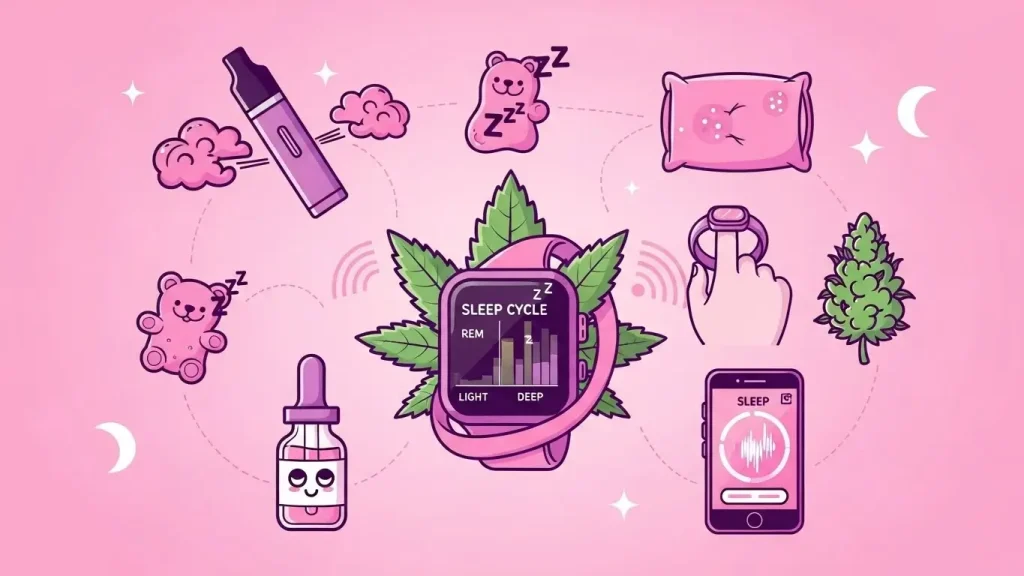
Imagine a world where your nightly cannabis routine isn’t a guessing game but a precisely calibrated ritual, informed by real-time data about your sleep architecture. This is the frontier of Cannabis and Sleep Tech in 2026. As the legal and cultural landscape surrounding cannabis continues to evolve, a parallel revolution is happening in personal biometrics, with advanced sleep trackers moving from simple step-counters to sophisticated health monitors. The fusion of these two fields represents the next leap in personalized wellness: using objective data to understand exactly how different cannabinoids, strains, and consumption times affect your unique sleep physiology.
This guide will show you how to sync your cannabis consumption with your body’s natural rhythms, using the latest sleep technology to move from hopeful experimentation to confident, data-backed optimization for truly restorative rest.
The Science of Sleep and the Endocannabinoid System
To understand how to sync cannabis with your sleep cycle, you must first understand the biological systems at play. Sleep is not a uniform state but a carefully choreographed cycle of stages: light sleep, deep slow-wave sleep (SWS) for physical restoration, and rapid eye movement (REM) sleep for memory consolidation and emotional processing. Your body orchestrates this nightly dance through complex neurological and chemical signals.
Central to this process—and to the effects of cannabis—is your endocannabinoid system (ECS). This vast network of receptors and neurotransmitters is a master regulator of homeostasis, influencing mood, pain, appetite, and crucially, your sleep-wake cycle. Your body produces its own endocannabinoids, like anandamide, which bind to receptors (primarily CB1 and CB2) to promote balance. When you consume cannabis, plant-derived cannabinoids like THC (tetrahydrocannabinol) and CBD (cannabidiol) interact with this same system, mimicking and modulating your natural chemistry.
Here’s a breakdown of how key cannabinoids interact with sleep physiology:
The critical insight from recent science is that these effects are not one-size-fits-all. A 2025 clinical trial published in the Journal of Clinical Sleep Medicine found that a CBD-terpene formulation marginally increased the percentage of time participants spent in the crucial restorative phases of SWS and REM sleep combined. This highlights the importance of the entourage effect—where cannabinoids and terpenes (the aromatic compounds in cannabis) work synergistically for enhanced benefit. The study noted that individuals with low baseline SWS+REM saw more robust improvements, underscoring the need for personalized approaches.
Why Guess When You Can Track? The 2026 Sleep Tracker Arsenal
The other half of the synchronization equation is technology. The best sleep trackers of 2025 and 2026 have evolved far beyond simple motion detection. They now use photoplethysmography (PPG) sensors, accelerometers, skin temperature monitors, and even bioimpedance sensors to provide a detailed picture of your night.
What do modern sleep trackers actually measure? Key metrics relevant to cannabis use include:
- Sleep Stages: Breakdown of light, deep, and REM sleep.
- Sleep Latency: How long it takes you to fall asleep.
- Resting Heart Rate (RHR) & Heart Rate Variability (HRV): Indicators of recovery and autonomic nervous system balance.
- Respiratory Rate: Can signal relaxation or disturbance.
- Skin Temperature: Fluctuations correlate with sleep stage transitions.
- Blood Oxygen (SpO2): Identifies potential breathing disturbances.
By tracking these metrics, you move from subjective feelings like “I slept poorly” to objective data: “My deep sleep was 15% lower than my baseline, and my sleep latency spiked to 45 minutes.”
Top Contenders for the Data-Savvy Cannabis User
Based on extensive testing by experts at CNET, the Sleep Foundation, and others, here are the leading devices for building your cannabis sleep protocol:
- Best Overall for Holistic Insight: Oura Ring
The Oura Ring is consistently a top pick for its balance of comfort, comprehensive data, and sleek design. Its Sleep Score and detailed stage breakdown make it easy to spot trends. A major advantage for experimentation is the Custom Tags feature. Oura members anonymously report that “weed” is a top-used tag, allowing them to correlate consumption nights with specific sleep scores and readiness metrics. - Best for Athletes and Recovery Focus: WHOOP 5.0 Band
The WHOOP 5.0 excels for those who view sleep as critical to performance and recovery. Its Recovery Score—based on HRV, RHR, and sleep performance—can tell you if a particular strain or dose leaves you well-recovered or depleted. Its AI coach can then recommend an earlier bedtime or lighter training day. - Best for Android Integration & Value: Samsung Galaxy Ring
A strong newcomer, the Samsung Galaxy Ring offers similar core tracking to Oura (except HRV) without a mandatory monthly subscription, making it a compelling value proposition. For Android users deeply embedded in the Samsung ecosystem, its seamless integration is a major plus. - Best Budget-Friendly Option: Fitbit Inspire 3
For those starting their tracking journey, the Fitbit Inspire 3 provides reliable sleep stage and SpO2 tracking at an accessible price point. While its insights are less advanced, it provides a solid foundation for spotting major correlations between habits and sleep quality.
The Art of Synchronization: A Step-by-Step Protocol for 2026
With an understanding of the science and the right tool on your wrist (or finger), you can now build a personalized synchronization protocol. This moves you from a passive consumer to an active biohacker of your own rest.
Step 1: Establish Your Baseline (2-4 Weeks)
Before introducing any cannabis variable, use your tracker consistently for several weeks. Go to bed and wake up at similar times. This establishes your personal baseline for metrics like total sleep, deep/REM sleep percentages, HRV, and resting heart rate. This baseline is your control group.
Step 2: Introduce Variables Methodically
Now, begin testing. The golden rule: only change one variable at a time. Use your tracker’s tagging feature to log details.
- Week 1: Strain & Chemotype. Try a classic indica-dominant strain (known for sedative effects) one night, a high-CBD strain another, and a balanced hybrid on a third. Tag each specifically.
- Week 2: Dose & Timing. Using your most promising strain from Week 1, test a low dose 90 minutes before bed vs. a moderate dose 60 minutes before bed. Does timing affect your sleep latency or next-day readiness score?
- Week 3: Format. Compare the effects of a fast-acting vape with a longer-lasting, slower-onset edible from the same strain. Track which provides more consistent sleep architecture without mid-night awakenings.
Step 3: Analyze the Data & Spot Patterns
After a month of testing, dive into your tracker’s trends view. Ask these questions:
- On which cannabinoid profile did I have the highest deep sleep percentage?
- Did THC-heavy nights consistently show reduced REM sleep, and did I feel less rested on those mornings despite longer sleep?
- Did CBD nights correlate with better HRV or readiness scores, even if sleep latency was slightly longer?
- Did any format (edible, vape) cause a spike in resting heart rate or disrupt temperature trends?
Step 4: Refine and Optimize Your Routine
Use your findings to build your ideal pre-sleep ritual. For example, your data might reveal:
- “A 10mg CBD:THC (1:1) edible 75 minutes before bed yields my highest Sleep Score, with optimal deep sleep and no REM suppression.”
- “Vaping a high-myrcene indica strain when my tracker shows high daytime stress helps me fall asleep quickly, but I should limit it to 2 nights a week to avoid tolerance and REM debt.”
This protocol turns anecdote into evidence, allowing you to use cannabis and sleep tech not as a crutch, but as a precise tool for enhancing restorative sleep.
Cautions, Tolerance, and Long-Term Sleep Health
While the short-term data can be promising, it’s crucial to view this practice through the lens of long-term sleep health. Relying solely on THC to induce sleep carries risks. As sleep scientist Matthew Walker, PhD, author of Why We Sleep, notes, while cannabis may speed the onset of “non-consciousness,” it can impair sleep quality over time and lead to dependency.
A significant risk is tolerance. The very sedative effects you’re tracking can diminish with regular use, potentially leading to increased dosage and a cycle where natural sleep becomes more difficult. Furthermore, chronic THC use suppresses REM sleep, and upon cessation, users often experience a “REM rebound“—a period of intense, vivid dreaming and disrupted sleep that can feel worse than the original insomnia.
Your tracker is your early-warning system for these issues. Watch for these red flags:
- A gradually increasing dose needed to achieve the same sleep latency score.
- A creeping decline in your baseline HRV or recovery score, indicating your nervous system is under more strain.
- On “off” nights without cannabis, dramatically worse sleep metrics than your original baseline.
The solution is cycling and prioritizing CBD. Use data-driven cannabis nights strategically—for high-stress periods or when travel disrupts your rhythm—but aim to have more nights guided by foundational sleep hygiene: a dark, cool room, consistent schedule, and wind-down routine. Let CBD or CBD-terpene blends be your go-to for regular support, as they offer relaxation and potential sleep structure benefits without the high, tolerance, and REM suppression associated with THC.
Conclusion: The Future of Personalized Rest is Here
The convergence of Cannabis and Sleep Tech is ushering in a new era of empowered self-care. We are no longer passive participants in our rest but active architects, equipped with ancient botanical tools and modern data streams. The journey to perfect sleep isn’t about finding a single magic strain or device; it’s about the synergy between them. It’s about using the objective feedback from a device like the Oura Ring or WHOOP to listen to your body’s nuanced language, understanding how a specific indica, a precise dose of CBD, or a unique terpene profile like myrcene or linalool writes its story across your sleep architecture.
Start tonight. Establish your baseline, experiment with intention, and let the data guide you. Share your discoveries and questions in the comments below. What has your experience been with tracking cannabis effects on sleep? By sharing our data and insights, we can all move closer to the ultimate goal: waking up every day truly restored, recovered, and ready.
Frequently Asked Questions (FAQs)
Does cannabis help you get more deep sleep?
Research and user data present a nuanced picture. Short-term use of THC has been shown to increase slow-wave sleep (SWS), which is the deepest, most physically restorative stage. However, this often comes at the cost of reduced REM sleep. Furthermore, tolerance to this effect can develop with chronic use. A 2025 study found that a CBD-terpene formulation increased combined SWS+REM sleep in some individuals with insomnia, suggesting a different pathway to enhancing restorative sleep.
What is the best cannabis strain for sleep according to research?
While individual responses vary, current evidence and conventional wisdom point to indica-dominant strains. A 2010 study concluded that indica reduced insomnia symptoms more than sativa, hybrid, or CBD-dominant options. This is often attributed to higher levels of the relaxing cannabinoid CBD and sedating terpenes like myrcene in indica varieties. The “best” strain is one whose effects—verified by your own sleep tracker data—align with your goals, whether that’s faster sleep onset or more sustained deep sleep.
Can using a sleep tracker reduce my cannabis tolerance?
A sleep tracker itself doesn’t reduce tolerance, but it is a powerful tool for managing and preventing tolerance. By providing objective data, it can alert you when you need to increase your dose to achieve the same sleep result—a clear sign of growing tolerance. This data allows you to make informed decisions to implement “tolerance breaks,” cycle different cannabinoids (e.g., using CBD several nights a week), or refine your timing and dosing to maintain efficacy with minimal escalation.
Are there any risks to combining CBD with prescription sleep medications?
Yes, there can be risks. CBD can interact with the liver’s cytochrome P450 enzyme system, which is responsible for metabolizing many common medications, including some prescription sleep aids and sedatives. This interaction can alter the blood levels of these drugs, potentially increasing side effects or reducing efficacy. It is essential to consult with your doctor or pharmacist before combining CBD with any prescription medication.
How accurate are consumer sleep trackers compared to medical-grade tests?
Consumer sleep trackers are very good at measuring trends and relative changes over time but are not as precise as a clinical polysomnogram (PSG), which is the gold standard for sleep studies. While they may not perfectly identify every minute of REM sleep, they are highly reliable for tracking metrics like total sleep time, restlessness, heart rate, and the overall structure of your night. For the purpose of correlating lifestyle habits like cannabis consumption with changes in your personal sleep patterns, their accuracy is more than sufficient.