
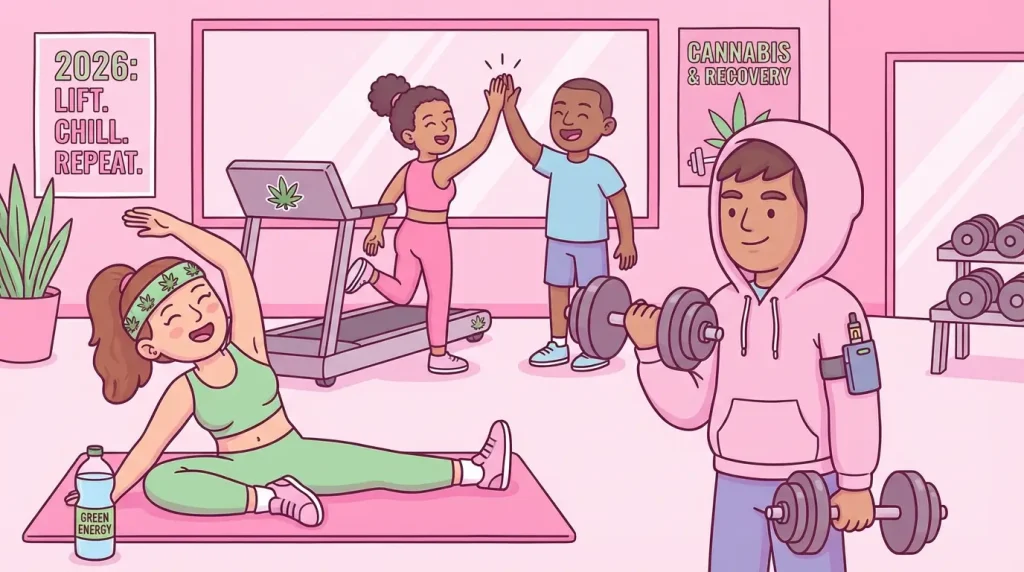
The intersection of cannabis and fitness is no longer a fringe topic discussed only in locker rooms or wellness blogs. As we move through 2026, the conversation has shifted dramatically. Once a strict taboo in the professional sports world, cannabis—both CBD and THC—is now being scrutinized under the bright lights of scientific research.
If you are a competitive athlete or just someone who loves crushing leg day, you have likely heard conflicting stories. Some claim that cannabis is a miracle worker for recovery, while others warn that it kills motivation and ruins lung function. So, what is the truth?
This guide cuts through the anecdotal noise to deliver the hard science and practical advice you need. We will explore how cannabis and the health and performance of the elite athlete interact, whether getting high before a workout is a terrible idea, and if those gummies in your drawer are helping or hurting your gains. Let’s find out how to navigate this new landscape safely and effectively.
The New Reality: Cannabis in Sports (The 2026 Landscape)
To understand where we are going, we need to look at where we have been. For decades, cannabis in sports was synonymous with doping and discipline. If you tested positive for THC, you faced suspensions and fines. However, the legalization wave across North America and parts of Europe has forced governing bodies to reassess.
Recent data published in Sports medicine indicates a significant uptick in cannabinoid use among Italian elite athletes from 2011 to 2023, with a sharp rise post-pandemic, largely driven by mental health management . This isn’t just an Italian trend; it is global.
Quick Fact: Major leagues like the MLB and NBA have removed cannabis from their banned substances lists, pivoting instead to a focus on mental health and addiction treatment. The NFL has even funded research grants to study cannabis and pain management .
For the everyday gym-goer in 2026, this destigmatization means you can have more open conversations with coaches and trainers about your wellness toolkit. But openness requires responsibility. It requires understanding the difference between the compounds you are putting into your body.
The Great Debate: THC vs. CBD for Athletes
Before we dive into the specifics of training, you must understand that “cannabis” is not a single entity. It is a plant containing hundreds of compounds, with two main players relevant to fitness:
- THC (Delta-9-tetrahydrocannabinol): The psychoactive component. It gets you “high.”
- CBD (Cannabidiol): The non-intoxicating component. It is touted for its therapeutic benefits.
This distinction is crucial because the World Anti-Doping Agency (WADA) treats them differently. CBD has been removed from the prohibited list, meaning it is allowed in and out of competition. THC, however, remains prohibited in-competition, although the urine threshold is now much higher (150 ng/mL) to avoid punishing incidental or out-of-competition use .
Cannabis and Exercise Recovery: Can It Really Heal Muscles?
If there is one area where science and anecdote seem to align, it is cannabis and exercise recovery. Anyone who has performed a heavy squat session knows the agony of delayed onset muscle soreness (DOMS) 48 hours later. Could cannabinoids be the answer?
A narrative review published by the Cannabis and Health Research Initiative highlights the potential role of CBD specifically. The review notes that while evidence is not yet conclusive, there are promising indications that CBD possesses anti-inflammatory and antioxidant properties . This is significant because muscle damage from exercise is essentially inflammation that needs to be resolved.
The Mechanism:
When you exercise intensely, you cause micro-tears in muscle fibers. The body’s inflammatory response rushes fluid and immune cells to the area to clean up and rebuild. The theory is that CBD interacts with the body’s endocannabinoid system (ECS)—a complex network of receptors that helps regulate sleep, appetite, and pain—to potentially modulate this inflammatory response. This could theoretically speed up the return to baseline, allowing you to hit the gym harder, sooner.
However, a 2024 study on cannabis and the health and performance of the elite athlete published in Sports Medicine urges caution. While acknowledging the interest, researchers found that elite athletes remain an underrepresented population in studies, and the “anecdotal reports suggesting positive effects” often outpace the hard data .
Real-World Application: CBD for Soreness
For the average lifter, this translates to a growing interest in CBD topicals and tinctures post-workout. Unlike ibuprofen, which can inhibit the long-term adaptation of muscles (the process that makes you stronger), CBD is believed by some to aid recovery without blunting those adaptive signals. Have you tried switching from NSAIDs to a CBD rub for your lower back pain after deadlifts? Many in the community are reporting positive results.
The 2026 Research: What the Labs Are Saying About CBD and Performance
To really act as an expert in this space, we have to look at the most recent, rigorous clinical trials. 2025 and 2026 have been bumper years for cannabinoid research.
The Australian CBD and Endurance Study
One of the most significant studies to date was a randomized controlled trial conducted at the University of Sydney and published in Sports Medicine – Open in late 2025. Researchers gave trained runners either a placebo, a low dose (50 mg), or a moderate dose (300 mg) of CBD before a strenuous treadmill run .
The Results:
- Performance: CBD did not improve time to exhaustion. It was neither ergogenic (performance-enhancing) nor ergolytic (performance-hindering).
- Perception: It did not change how hard the run felt (RPE), nor did it affect the runners’ enjoyment or anxiety levels during the run.
- Physiology: Heart rate and oxygen consumption remained unchanged.
The Takeaway: For endurance athletes, taking CBD is unlikely to give you a “boost” or a “hinderance.” It appears physiologically neutral regarding acute performance. However, the 300 mg dose did slightly alter the respiratory exchange ratio, hinting at a potential metabolic shift that requires more study .
The German Strength and Recovery Study
Looking at muscle recovery specifically, a 2024 study in the Journal of the International Society of Sports Nutrition investigated the “influence of short-term chronic oral cannabidiol application on muscle recovery and performance after an intensive training protocol” .
This double-blind crossover study found that participants using CBD showed trends toward better recovery of muscle function compared to placebo. While the authors call for more research, this is one of the first pieces of evidence suggesting that CBD might actively help in the repair process rather than just masking pain .
Pros and Cons of Working Out High
Now, let’s address the elephant in the room—or rather, the lifter in the cloud of smoke. Is it smart to mix THC and your workout? The answer is highly individual, but science gives us a framework to weigh the pros and cons of working out high.
The Pros (Why Some Swear By It)
- Mind-Muscle Connection: Some athletes, particularly in flow-based sports like climbing, surfing, or yoga, report that a low dose of THC helps them “get in the zone.” It silences the distracting “noise” of the day, allowing them to focus entirely on the movement.
- Runners’ High Intensification: There is a concept known as the “runner’s high,” attributed to endorphins and endocannabinoids naturally produced by the body. By introducing external cannabinoids, some runners report a more euphoric and enjoyable long-distance experience.
- Battling Boredom: Let’s be honest—logging miles on a treadmill can be mind-numbingly boring. A little psychoactive lift can make the stationary session feel more engaging.
The Cons (The Science of Risk)
- Impaired Motor Function: This is the big one. The Association of Ringside Physicians published a stern position statement in 2024 discouraging cannabis use in combat sports. Their reasoning is solid: acute use impairs cognition and complex motor function . If you are lifting heavy weights overhead or performing complex plyometrics, impaired coordination is a direct ticket to injury.
- Increased Cardiovascular Strain: Exercise already stresses the heart. Cannabis can increase heart rate (tachycardia) and alter blood pressure. Combining the two can put undue strain on the cardiovascular system, especially for those with underlying conditions.
- Reduced Intensity: The study on edible marijuana and cycle ergometer exercise found that 10mg of THC did not improve or hinder power output, but this was in habitual users . For the novice, the “couch-lock” effect of some strains might make it nearly impossible to find the intensity needed for a PR (personal record).
Expert Insight: If you are considering working out with THC, think “microdose.” The goal is to feel slight sensory enhancement, not intoxication. And never mix it with heavy compound lifts or activities requiring split-second reactions (like team sports).
Are Edibles Bad for Athletes? A Deep Dive
This is one of the most common questions in the fitness community right now: are edibles bad for athletes? The knee-jerk reaction is to say “yes” due to the stigma, but the real answer requires nuance.
The previously mentioned 2022 study from the University of Colorado provides the best data we have on this specific topic. Researchers tested the effects of edibles (containing 10 mg THC) on cyclists. They measured everything from power output to heart rate.
The Verdict:
The study concluded that the edible marijuana was neither ergogenic nor ergolytic . In plain English, the cookies didn’t make them faster, but they didn’t make them slower either. The physiological response to exercise (breathing, heart rate) was “normal and unaffected” by the edibles .
The Hidden Dangers of Edibles for Athletes
However, just because it doesn’t ruin your FTP (Functional Threshold Power) doesn’t mean it’s a free pass. Here is why athletes need to be wary:
- Dosing Inconsistency: It is incredibly easy to over-consume edibles. A 10mg dose is very different from a 50mg dose. Overconsumption leads to the motor impairment we discussed, which is dangerous.
- The Lung Factor: While vaping or smoking can irritate the lungs (a big no-no for endurance athletes), edibles bypass this. However, they hit the liver harder, creating a more potent metabolite (11-hydroxy-THC) that can be more intense and long-lasting.
- Testing Risks: Even if you consume edibles on a Friday night, you might still test positive during a competition on Saturday afternoon, depending on metabolism and dosage.
So, are edibles bad for athletes? They are not inherently “bad,” but they are risky. If used, they should be reserved for after competition or training is completely finished for the day, as a sleep or recovery aid, not as a pre-workout ritual.
The Risks You Can’t Ignore: Heart, Lungs, and Hormones
While the recovery potential is exciting, responsible journalism requires us to look at the “dark zone” of cannabis use, as described in a recent Nutrients review . Chronic, heavy use—especially of high-THC products—carries real risks for the active person.
- Respiratory Health: Smoking anything introduces carcinogens and tar into the lungs. For runners, swimmers, and cyclists, lung capacity is currency. Vaping is often positioned as a safer alternative, but it is not without its own risks of lung injury. If lung performance is your priority, stick to edibles or topicals.
- Cardiovascular Events: As mentioned, the combination of the immediate heart rate increase from exercise and from THC can theoretically increase the risk of adverse events in vulnerable individuals.
- Testosterone: The Association of Ringside Physicians’ review highlighted that chronic cannabis use “can reduce testosterone in men and impair fertility” . For male athletes focused on hypertrophy and strength, maintaining optimal testosterone levels is key. This is a risk factor that warrants serious consideration.
How to Optimize Your Approach (If You Choose to Use)
If, after weighing the science, you decide to incorporate cannabis into your fitness regimen, do it with the precision of an athlete. Here is your 2026 playbook:
1. Know Your “Why”
- For Sleep: Indica-dominant strains or high-dose CBD tinctures 60 minutes before bed.
- For Inflammation/Pain: Broad-spectrum CBD topicals or oral drops post-workout.
- For Focus (Sativas): Only microdoses, and only for low-risk, steady-state cardio or yoga. Never for heavy lifting.
2. Mind the Testing Windows
If you are a competitive athlete subject to testing, THC is off the table in-competition. CBD is safe, but only if it is “broad-spectrum” or “isolate.” Full-spectrum products contain trace amounts of THC, which can build up in your system over time and trigger a positive test.
3. Source Wisely
The supplement industry is notoriously under-regulated. Look for products that provide third-party lab testing (Certificates of Analysis or COAs). This verifies that the product contains what it says on the label and is free from contaminants like heavy metals or pesticides.
Conclusion: The Balanced Approach to Cannabis and Fitness
The conversation around cannabis and fitness has matured. We have moved past the “Reefer Madness” era into a nuanced scientific exploration. For 2026, the takeaway is clear:
- For recovery, CBD shows genuine promise as an anti-inflammatory tool. The research on cannabis and exercise recovery is promising enough that many athletes are making it a staple of their post-workout routine .
- For performance, the playing field is level. Science shows it won’t make you a superstar, but it won’t ruin your workout either—provided you manage the pros and cons of working out high responsibly .
- For health, moderation is key. Understand the risks to your heart, lungs, and hormonal health if you go overboard .
Ultimately, whether you are an elite competitor or a weekend warrior, your body is your temple. Treat cannabis like any other tool in the shed—use it with intention, knowledge, and respect. Are you currently using cannabis as part of your fitness routine? What has your experience been with recovery versus performance? Drop a comment below and let’s continue the conversation.
Frequently Asked Questions (FAQ)
1. Is CBD allowed in professional sports?
Yes. The World Anti-Doping Agency (WADA) removed Cannabidiol (CBD) from its prohibited list in 2018. It is permitted in and out of competition. However, all other cannabinoids (like THC) remain prohibited in-competition .
2. Can using cannabis help me build muscle faster?
Indirectly, possibly. There is no evidence that cannabis builds muscle directly. However, if it helps you sleep better (where growth hormone is released) and reduces inflammation, it may contribute to a better recovery environment, allowing you to train more consistently .
3. Does working out high affect my heart rate?
Yes. Both exercise and THC can increase heart rate. Combining them can lead to an elevated heart rate (tachycardia) that may be uncomfortable or risky for individuals with heart conditions .
4. Will edibles ruin my endurance performance?
Research suggests no. A 2022 study on cyclists found that 10mg of THC did not positively or negatively impact their power output or physiological response to exercise compared to a placebo .
5. Is it safe to use cannabis and ibuprofen together for pain?
You should consult a doctor. Both substances can affect the liver and kidneys. While interactions are not fully studied, it is best to avoid mixing substances without medical supervision.
6. How long should I wait to exercise after taking an edible?
It depends on the dose and your tolerance. For psychoactive doses, it is safest to wait until the “high” has completely subsided—usually 4 to 6 hours—to ensure motor function and coordination are not impaired during your workout.