
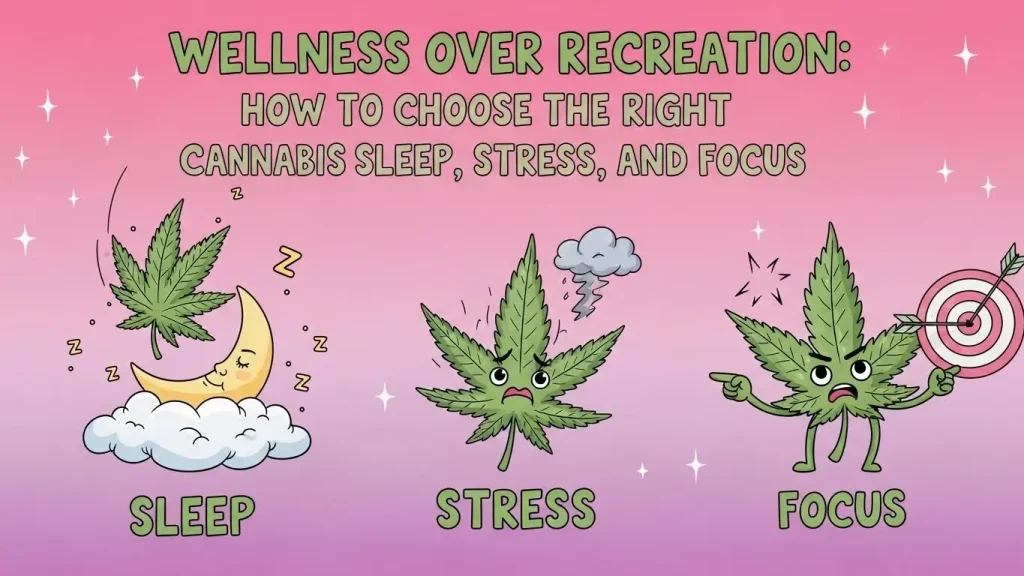
Have you ever scrolled through endless online menus or dispensary shelves, completely overwhelmed by the options? You’re looking for real relief—a way to quiet your mind at night, manage the day’s stress, or sharpen your focus—but the choice between Indica, Sativa, CBD, THC, and a hundred exotic strain names feels like a gamble. What if the product that promises calm leaves you anxious, or the one for focus makes you foggy?
The old, recreational mindset of simply chasing a high is over. In 2026, the conversation has decisively shifted to one of intentional wellness and therapeutic outcomes. You’re not just asking, “does cannabis work for sleep?” You’re asking which specific kind works, for your specific need, and how. The good news is that the science has caught up. A landmark 2025 study published in Sleep Medicine Reviews confirmed that cannabinoids can significantly improve sleep quality, especially for those with poor sleep or insomnia. Another long-term study following patients for 18 months found that medical cannabis provided sustained improvements in sleep and anxiety where other treatments had failed.
This guide is your roadmap through the new landscape of wellness-focused cannabis. We’ll move beyond the marketing hype and dive into the latest research on how cannabis really works for sleep, stress, and focus. You’ll learn how to decode product labels, understand the critical roles of THC, CBD, and terpenes, and make empowered choices that align with your personal health goals. Let’s begin.
The New Science of Cannabis: Beyond Indica vs. Sativa
For years, the cannabis world was ruled by a simple, two-type system: Indica for relaxation and sleep, Sativa for energy and creativity. While this can be a helpful starting point, modern science reveals it’s a dramatic oversimplification. The true effects of a cannabis product are determined by its unique chemical blueprint—its cannabinoid and terpene profile.
Decoding the Chemical Language of Cannabis
Think of the cannabis plant as a symphony orchestra. The cannabinoids are the main instruments, and the terpenes are the conductors that shape the final experience.
- Cannabinoids (The Instruments): These are the primary active compounds. The two most researched are THC (tetrahydrocannabinol) and CBD (cannabidiol), but others like CBN are gaining attention.
- THC: The primary psychoactive compound. At lower doses, it can be sedating and relieve pain; at higher doses, effects can vary dramatically.
- CBD: Non-psychoactive and known for its anti-anxiety, anti-inflammatory, and calming properties. It can modulate the effects of THC.
- CBN: Often found in aged cannabis and created from the breakdown of THC, it is popularly associated with promoting drowsiness and sleep.
- Terpenes (The Conductors): These aromatic compounds give cannabis its distinctive scents (like pine, citrus, or lavender) and directly influence its effects by interacting with cannabinoids—a phenomenon known as the “entourage effect”.
- Myrcene: Earthy and musky. Strongly associated with sedative, relaxing effects. Abundant in classic “Indica” strains like Granddaddy Purple.
- Limonene: Citrusy. Uplifting and mood-elevating; may help relieve stress. Common in “Sativa” strains.
- Linalool: Floral (like lavender). Promotes calm and relaxation, with noted anti-anxiety properties.
Why the “Body High” vs. “Head High” Model is Outdated
Relying solely on the Indica/Sativa label is risky. A strain marketed as “Sativa” could be high in the sedative terpene myrcene, potentially making you sleepy. Conversely, an “Indica” with high levels of limonene might be more uplifting than expected.
The 2026 Approach: Look at the Certificate of Analysis (COA). A reputable product will have lab results showing the percentages of THC, CBD, and major terpenes. This data, not the strain name, is your key to predicting effects. For example, a product for sleep should ideally show a significant level of myrcene, paired with moderate THC or CBD.
Ready to apply this science? Let’s start with one of the most common wellness goals: achieving restorative sleep.
Strategic Goal 1: Optimizing Cannabis for Restorative Sleep
Using cannabis as a sleep aid is one of its most popular applications, with a significant portion of adults reporting they have used it for this purpose. But the critical question isn’t just “can cannabis help you sleep better?” but how to use it correctly to avoid pitfalls and maximize the benefits of cannabis for sleep.
How Cannabis Influences Sleep Architecture
Cannabis doesn’t just knock you out; it interacts with your sleep cycles. Short-term use typically helps people fall asleep faster (reduces sleep onset latency) and can increase deep, slow-wave sleep, which is crucial for physical restoration. However, a consistent finding is that THC suppresses REM (Rapid Eye Movement) sleep, the stage associated with dreaming and memory processing.
- The Short-Term Benefit: For someone plagued by nightmares (e.g., with PTSD) or who simply can’t switch off their mind, this REM suppression and sleep consolidation can be a welcome relief.
- The Long-Term Consideration: Chronic, heavy use may lead to tolerance, where the sleep-promoting effects diminish, and can disrupt natural sleep architecture. Abrupt cessation can then cause a REM rebound, leading to vivid, intense dreams.
Your Action Plan: Choosing and Using a Sleep Aid
- Prioritize Cannabinoid & Terpene Profiles: For sleep, seek out products with myrcene, linalool, or terpinolene. In terms of cannabinoids, CBN is specifically touted for drowsiness, while THC (in moderate doses) and CBD (for anxiety-driven insomnia) are effective. The 2025 meta-analysis found that non-CBD cannabinoid formulations (like those containing THC or CBN) showed greater efficacy for improving sleep quality than CBD-only products.
- Select the Right Strain Type: Generally, Indica-dominant strains are your best starting point for sleep due to their typical chemical profile. Notable examples from research and user reports include:
- Choose the Optimal Consumption Method:
- Edibles & Tinctures: Often considered the best cannabis method for sleep. They provide a longer-lasting effect (4-8 hours), helping you stay asleep through the night. Start with a low dose (e.g., 2-5mg THC) 60-90 minutes before bed.
- Vaporizing/Smoking: Effects are felt within minutes but typically last only 1-3 hours. Useful if you have trouble falling asleep but may not prevent early waking.
- Avoid Common Pitches: Be wary of high-THC “Sativa” strains before bed, as they can be cerebrally stimulating. Also, understand that while cannabis is an effective symptomatic aid, current research does not indicate it cures insomnia as a chronic condition; it is a management tool.
Now that we’ve covered the night, let’s explore how to use cannabis to navigate the challenges of the day.
Strategic Goal 2: Using Cannabis for Sustainable Stress and Anxiety Relief
Chronic stress and anxiety are primary enemies of both daily well-being and nightly sleep. Many people are turning to cannabis as an alternative to traditional anxiolytics. The key is to use it as a targeted tool, not a blanket sedative.
How Cannabis Can Calm the Anxious Mind
Both THC and CBD can play a role, but their effects are dose-dependent and can be paradoxical.
- CBD is generally considered a reliable anti-anxiety agent. It acts on serotonin receptors and modulates the psychoactive effects of THC, promoting calm without intoxication.
- Low-dose THC may produce relaxing effects. However, moderate to high doses of THC can actually induce or worsen anxiety and paranoia in many individuals. This is why careful dosing is non-negotiable.
Your Action Plan: Finding Your Calm
- Start with CBD-Dominant Products: For pure anxiety relief without a high, CBD-dominant strains or broad-spectrum oils are the safest and most effective starting point. Strains like Harlequin or ACDC offer high CBD-to-THC ratios.
- If Using THC, Microdose: If seeking the added mood-lifting effect of THC, choose a balanced hybrid or Sativa-dominant strain with high limonene (for mood elevation) and linalool (for calm). Consume a very small amount (1-2.5mg THC) to test your response.
- Choose Your Consumption Method Wisely:
- Tinctures/Oils: Ideal for precise, low-dose administration. Place drops under the tongue for relatively fast, manageable effects.
- Low-dose Edibles: Provide sustained relief but require careful dosing due to delayed onset.
- Avoid: High-THC inhalables when highly stressed, as the rapid, intense onset can trigger anxiety.
Strategic Goal 3: Harnessing Cannabis for Enhanced Focus and Flow
Perhaps the most nuanced and modern application of wellness cannabis is for focus. The goal isn’t sedation or euphoria, but a clear, calm, and sustained state of concentration—often called “flow.”
The Fine Line Between Focus and Distraction
The stereotype is that all cannabis impairs cognition. However, specific cannabinoid and terpene profiles can reduce background mental chatter and anxiety, allowing for deeper immersion in a task.
- THC’s Double-Edged Sword: Very low doses might reduce distracting anxiety, but any perceptible “high” will likely impair working memory and complex cognitive function.
- CBD’s Role: By reducing anxiety, CBD can indirectly improve the ability to focus, especially in high-stress situations.
- Terpenes are Key: Pinene (associated with alertness and memory retention) and limonene (for uplifting mood) are terpenes to look for in focus-oriented products.
Your Action Plan: Sharpening Your Mind
- The Best Cannabis for Focus is Often Low- or No-THC: A CBD-dominant product with pinene and limonene terpenes is the most reliable tool for clearing anxiety without cognitive impairment.
- Explore Specific Sativa-Dominant Hybrids: If tolerating minimal THC, certain Sativa-dominant strains like Jack Herer or Durban Poison are historically associated with clear-headed, creative energy. Is Sativa or Indica better for creative thinking? Typically, the cerebral, uplifting reputation of Sativa aligns better with creativity, but always verify the terpene profile.
- Consumption Method: Low-dose tinctures or vaporizers allow for precise, rapid-onset control. Use the absolute minimum effective dose.
- Timing is Everything: Use only when you need to enter a focused work session, not continuously throughout the day. This prevents tolerance and maintains efficacy.
Building Your Personalized Cannabis Protocol: A Step-by-Step Framework
Now that you understand the goals, let’s build your personal system. This framework minimizes risk and maximizes the likelihood of success.
Step 1: Define Your Primary Objective
Be specific. Is it “fall asleep within 30 minutes,” “reduce afternoon anxiety without drowsiness,” or “maintain focus for a 2-hour writing session”? Your objective dictates everything that follows.
Step 2: Start with a Low Dose and Slow Titration
This is the single most important rule in harm reduction and effective use.
- For Edibles/Tinctures: Start with 1-2.5mg of THC and/or 5-10mg of CBD. Wait at least 2 full hours before considering a slight increase.
- For Inhalation: Take one small puff. Wait 15 minutes to assess the full effect before taking another.
Step 3: Journal Your Experience (The “Cannabis Log”)
Track every variable to become your own expert:
- Date/Time: When did you consume?
- Product: Brand, strain name, THC/CBD %, notable terpenes (if known).
- Dose: How much did you take (mg or hits)?
- Onset/Duration: How long did it take to feel effects? How long did they last?
- Effects: Rate your symptom relief (1-10). Note any positive effects (calm, focus, sleep quality) and any negatives (dry mouth, anxiety, next-day grogginess).
- Context: What were you doing? How was your stress level that day?
After 5-10 entries, patterns will emerge, showing you exactly what works for your body.
Step 4: Cycle and Integrate Non-Cannabis Practices
To prevent tolerance and build holistic resilience, don’t rely on cannabis alone.
- Practice Tolerance Breaks: Consider skipping 1-2 days per week.
- Integrate Foundational Practices: Pair cannabis with other wellness tools. For sleep, this includes sleep hygiene (dark, cool room, no screens before bed). For stress, combine with mindfulness or breathwork. For focus, use it alongside the Pomodoro Technique or time-blocking.
Conclusion: Empowering Your Intentional Wellness Journey
The journey from recreational curiosity to intentional wellness is one of empowerment. By moving past the outdated Indica/Sativa binary and embracing the science of cannabinoids and terpenes, you gain precise control over your experience. You now know that the answer to “does cannabis really work” is a resounding “yes”—but with the critical caveat that it works specifically and differently based on the chemical profile you choose and the intention you set.
The landscape of cannabis for sleep, stress, and focus in 2026 is rich with potential for those willing to be informed and mindful. Start low, go slow, keep a log, and always prioritize products with verifiable lab testing. Use this guide as your foundation to experiment safely and discover the protocols that unlock better rest, greater calm, and deeper focus.
Ready to take the next step? Share your experiences or questions in the comments below. What wellness goal are you most interested in exploring with cannabis? For more detailed guides on specific products or consumption methods, explore our other expert articles.
Disclaimer
This article is for informational and educational purposes only. It is not a substitute for professional medical advice, diagnosis, or treatment. The legal status of cannabis varies by country, state, and locality. Always consult with a qualified healthcare provider before starting any new wellness regimen, especially if you have pre-existing medical conditions, are pregnant or breastfeeding, or are taking other medications. The author and publisher are not responsible for any adverse effects resulting from the use of information contained herein.
Frequently Asked Questions (FAQs)
Can cannabis help you fall asleep faster?
Yes, numerous studies and user reports indicate that cannabis, particularly strains or products with certain cannabinoids like THC and CBN, can reduce the time it takes to fall asleep (sleep onset latency). This is one of the most consistently reported benefits of cannabis for sleep.
Does cannabis affect REM sleep?
Yes. THC, a primary component in many cannabis products, has been shown to suppress REM (Rapid Eye Movement) sleep. While this can reduce dreaming and be helpful for those with nightmares, it may impact memory consolidation and emotional processing that occurs during REM cycles.
Does THC make you sleepy?
It can, but its effects are dose-dependent. At low to moderate doses, THC often has sedative and relaxing effects. At higher doses, effects can become more stimulating or even anxiogenic (anxiety-inducing). The terpene profile of the product also plays a major role.
What type of cannabis is best for sleep?
Indica-dominant strains are generally recommended for sleep due to their typical chemical profile, which is higher in the sedative terpene myrcene. Strains like Northern Lights, Granddaddy Purple, and Bubba Kush are famous for their sleep-promoting properties. Products containing CBN are also specifically marketed for sleep support.
What is the best cannabis method for sleep?
Edibles, tinctures, or capsules are often considered optimal for sleep because they provide longer-lasting effects (several hours), which can help you stay asleep through the night. Inhalation (smoking/vaping) acts quickly to help you fall asleep but may wear off sooner.
Can cannabis help with anxiety?
Yes, particularly products rich in CBD. CBD is widely recognized for its anti-anxiety properties without causing intoxication. Low doses of certain THC-dominant products may also help some individuals, but higher doses of THC can worsen anxiety, so caution and careful dosing are essential.
Are weed strains good for insomnia?
Cannabis can be an effective tool for managing the symptoms of insomnia, such as difficulty falling or staying asleep. Research, including a 2025 meta-analysis, supports its use for improving subjective sleep quality. However, it is generally viewed as a management aid rather than a cure for the underlying condition of chronic insomnia.
Is sativa or indica better for focus?
Sativa-dominant strains have a traditional reputation for being better for focus and creativity due to their typically more uplifting and cerebral effects. However, the most reliable choice for pure focus, especially for those sensitive to THC, is often a CBD-dominant product with terpenes like pinene, which is associated with alertness.