
Are you standing in a dispensary, feeling overwhelmed by the sheer number of choices? You’re not alone. Whether you are seeking relief from a chronic condition or just looking to unwind on a Friday night, the first—and most critical—decision you face is choosing between medical vs. recreational cannabis. It’s not just about a label; it’s about understanding what these categories mean for your health, your wallet, and your overall experience.
In this guide, we will break down the nuances of medical vs. recreational cannabis like a true expert. We’ll explore the science, the legal frameworks, and the practical strategies to ensure you walk away with exactly what you need. By the end, you’ll be equipped to navigate any dispensary menu with confidence. So, let’s dive in: are you looking for symptom management or social enjoyment? The answer will shape your entire journey.
What is Medical Cannabis? A Focus on Healing
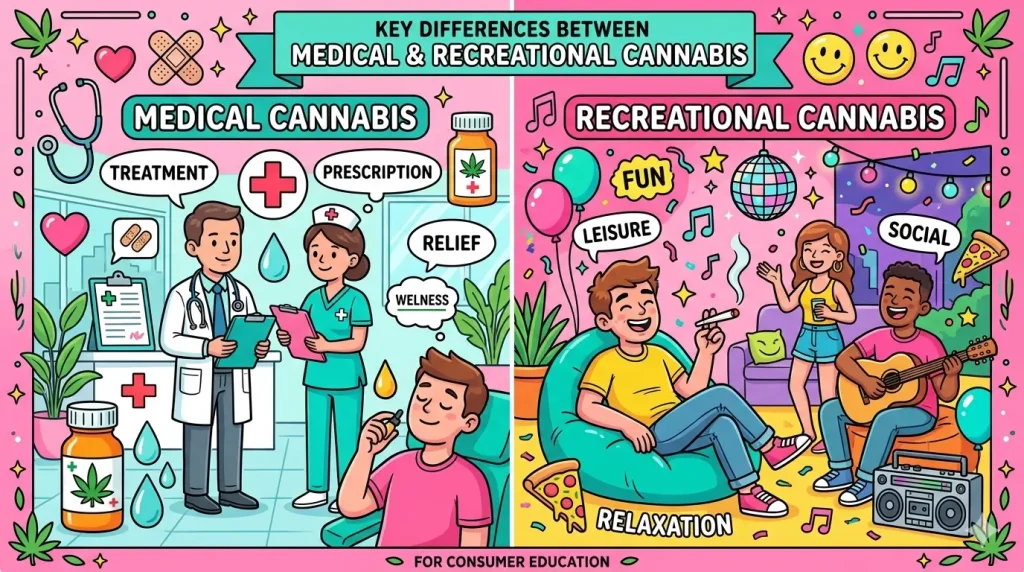
When we talk about medical cannabis, we are referring to the use of the cannabis plant—or its extracts—to treat specific symptoms or diseases. This isn’t just about feeling good; it’s about restoring quality of life. For patients suffering from chronic pain, epilepsy, PTSD, or the side effects of chemotherapy, medical cannabis serves as a legitimate therapeutic tool.
Think of it like this: if you were a chef, medical cannabis is your recipe for a specific dietary need—low sugar, high protein, allergen-free. It is tailored. According to a 2023 study published in the Journal of the American Medical Association (JAMA), states with medical cannabis programs saw a 17% reduction in opioid prescriptions, highlighting its efficacy as a pain management alternative.
The process to obtain it is rigorous. You typically need a diagnosis from a licensed physician, followed by registration with a state health department. This isn’t just red tape; it ensures that the patient receives a structured treatment plan.
What is Recreational Cannabis? The Pursuit of Enjoyment
On the flip side, recreational cannabis—often referred to as “adult-use”—is about enjoyment, creativity, and social connection. Imagine you are choosing a fine wine to pair with dinner. Recreational cannabis offers a curated experience aimed at enhancing mood, sparking conversation, or simply helping you relax after a long work week.
Have you ever wondered why one strain makes you feel creative while another makes you want to nap? That’s the art of recreational cannabis. Retailers focus heavily on the cannabinoid profile (THC vs. CBD) and terpenes (aromatic compounds like myrcene or limonene) to predict the “high” or effect.
While recreational cannabis doesn’t require a doctor’s note, it often comes with higher taxes and stricter purchasing limits. It’s designed for the adult consumer who is looking for safe, regulated access to a plant that was once only available in illicit markets.
The Core Differences: Medical vs. Recreational Cannabis
To truly understand the key differences, we need to look beyond the surface level. It’s not just about a card vs. no card. Here is where the lines blur and clarity matters most.
Legal Requirements and Accessibility
The most obvious distinction in the medical vs. recreational cannabis debate is the legal framework.
- Medical: Requires a Medical Marijuana Card. This involves a consultation with a certified healthcare provider. The benefit? Often, medical patients have higher possession limits, priority access during shortages, and legal protection in states where adult-use is still illegal.
- Recreational: Requires a valid government-issued ID proving you are 21 or older. It’s simpler to purchase, but you are subject to adult-use regulations, which often prioritize retail sales over patient care.
Potency, Pricing, and Product Selection
Let’s talk numbers. In most markets, medical vs. recreational cannabis is separated by potency and tax structure.
- Potency: Medical products often feature higher CBD-to-THC ratios or specific high-THC strains aimed at pain relief. Recreational products typically focus on high THC percentages for psychoactive effects.
- Pricing: This is a big one. Recreational cannabis usually carries a “sin tax” (sometimes 20-30% on top of sales tax). Medical cannabis is frequently tax-exempt, saving patients hundreds of dollars annually. Did you know that in some states like California and Colorado, medical patients also get priority access to “top-shelf” strains before they hit the recreational market?
- Selection: Medical dispensaries tend to stock more tinctures, suppositories, and transdermal patches—products designed for ingestion or absorption without inhalation. Recreational stores focus heavily on flower, vapes, and edibles designed for the immediate gratification of a high.
The Role of the Budtender vs. the Doctor
Who is guiding your purchase? This is a crucial factor in the medical vs. recreational cannabis ecosystem.
- Budtenders in recreational shops are experts in flavors, effects, and consumption methods. They can recommend a strain for “chilling” or “focus.”
- Medical Consultants (often pharmacists or specialized budtenders) in medical dispensaries work with you on dosing schedules, drug interactions, and long-term treatment plans.
The Science: Cannabinoids and Terpenes
To make an informed choice, you need to understand the chemistry behind the plant. Whether you are using medical vs. recreational cannabis, the active ingredients are the same; the ratio changes.
THC (Tetrahydrocannabinol): The primary psychoactive compound. In recreational use, high THC is often the goal. In medical use, THC is utilized for pain, nausea, and appetite stimulation, but often balanced with CBD to mitigate anxiety.
CBD (Cannabidiol): Non-psychoactive. This is the darling of the medical world. Studies from the National Institutes of Health (NIH) show CBD is highly effective for inflammation, seizure disorders, and anxiety without the “high.”
Terpenes: These are the aromatic oils that give cannabis its smell. Myrcene (earthy) is sedating; Limonene (citrus) is uplifting.
How to Choose What’s Right for You
So, how do you decide? The best choice in the medical vs. recreational cannabis debate depends entirely on your goals. Let’s walk through a few scenarios.
Scenario 1: The Chronic Pain Sufferer
If you suffer from arthritis or back pain, medical cannabis is your best bet. You need access to high-CBD topicals and consistent dosing. Getting a medical card allows you to work with a pharmacist to find a strain that reduces inflammation without intoxicating you during work hours.
Scenario 2: The Social Explorer
If you’re attending a concert or a dinner party and want to enhance the experience, recreational cannabis is the way to go. You can pick up a low-dose edible or a pre-roll without the commitment of a year-long doctor’s registration. However, be mindful of the tax rate—your $30 eighth might cost $45 at the register.
Scenario 3: The Mixed-Use Consumer
Many people fall into this category. They might use recreational cannabis for social events but rely on medical cannabis for sleep or anxiety management. In this case, holding a Medical Marijuana Card often offers the best of both worlds: tax breaks on all purchases and access to a wider variety of products.
Common Misconceptions Debunked
Let’s clear the smoke on a few myths surrounding medical vs. recreational cannabis.
- Myth: Medical cannabis is “weaker” than recreational.
- Fact: Not necessarily. Medical cannabis is often more potent in specific therapeutic compounds. A medical tincture might have 500mg of CBD and 100mg of THC, which is a potent combination that a recreational user might find too mild or too strong depending on their tolerance.
- Myth: You need a medical card to get high-quality products.
- Fact: The rise of craft cannabis in the recreational market has produced some of the highest-quality, small-batch flower in history. The difference isn’t quality; it’s purpose.
- Myth: The regulations are the same for both.
- Fact: They are worlds apart. Medical cannabis is protected under state-level health privacy laws (HIPAA in some contexts), whereas recreational purchases are retail transactions.
Frequently Asked Questions (FAQs)
1. Can I buy recreational cannabis if I have a medical card?
Absolutely. In most states, having a medical card simply gives you more options. You can shop in the medical section for tax-free, high-potency products, or visit the recreational side for novelty items. The key is to always inform the budtender of your patient status to maximize savings.
2. Which is cheaper: medical or recreational cannabis?
Medical cannabis is significantly cheaper due to lower taxes. While recreational sales often incur a 15-30% excise tax, medical patients are usually exempt from these additional fees, making the long-term cost far lower.
3. Are the products different between medical and recreational dispensaries?
Yes and no. The raw plant is the same, but the product mix differs. Medical dispensaries focus on edibles, oils, and capsules with precise dosing for chronic conditions. Recreational dispensaries focus more on flower, vapes, and high-THC concentrates designed for immediate euphoria.
4. Do I need a diagnosis to get medical cannabis?
Yes, in most regulated states, you need a qualifying condition. Common conditions include chronic pain, PTSD, cancer, epilepsy, and multiple sclerosis. However, the list is expanding. It’s best to check your state’s specific health department guidelines.
5. Can I use my medical card in another state?
This depends on “reciprocity.” Some states (like Nevada, Michigan, and Arizona) accept out-of-state medical cards, allowing you to purchase medical cannabis as a visitor. Others (like California) do not; you must be 21+ to buy recreational.
6. What should I look for on the label?
Whether you are buying medical vs. recreational cannabis, always check the THC percentage, CBD percentage, and the harvest date. Fresher flower provides a better terpene profile. For medical patients, the batch number is crucial for tracking consistency.
7. Is medical cannabis safer than recreational?
From a safety standpoint, both are regulated for pesticides, mold, and heavy metals. However, medical cannabis offers a safer consumption path because it encourages non-inhalation methods (like tinctures) that are easier on the lungs.
8. Can I grow my own plants?
Usually, yes, but the rules vary. Medical patients are often allowed to cultivate more plants than recreational users. In states like Florida, medical patients can’t grow at all, while recreational states like Colorado allow up to 12 plants per household.
Final Verdict: Making an Informed Choice
Navigating the world of medical vs. recreational cannabis doesn’t have to be confusing. The core of the decision lies in understanding your personal needs.
If you are using cannabis to manage a health condition, to reduce reliance on pharmaceuticals, or to treat a specific symptom like insomnia, the medical route is the gold standard. It offers tax benefits, higher potency limits, and professional medical guidance. It turns a transaction into a treatment.
If you are an adult looking to enjoy the plant responsibly for leisure, creativity, or social bonding, recreational cannabis offers the variety and accessibility you need. It’s simpler, faster, and often more focused on the experiential side of the plant.
Remember, you don’t have to lock yourself into one identity. Many savvy consumers maintain their medical card for the cost savings while still enjoying recreational products.
What has your experience been with medical vs. recreational cannabis? Have you found that one serves you better than the other? Share your thoughts in the comments below—we’d love to hear your story.