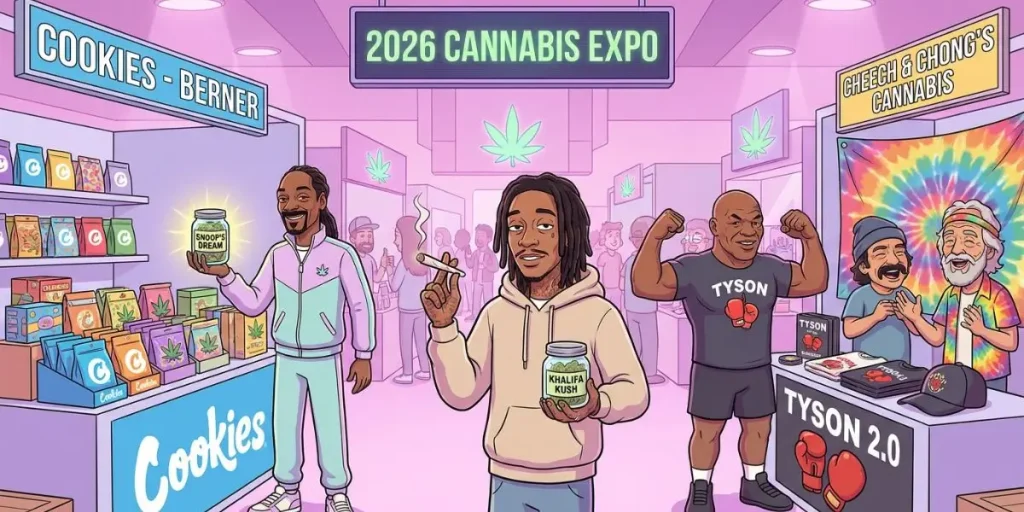
The scent of fresh flower and shattered dreams is thick in the air. Let’s be brutally honest for a moment: the celebrity cannabis industry was once viewed as an unstoppable gold mine. Slap a recognizable name on a pre-roll, and the sales virtually automated themselves. But this is 2026, and the hangover from the green rush is very, very real. The consumer has evolved. The buying journey has transformed. Your favorite actor’s face on a mylar bag simply isn’t enough to secure a spot in a digital shopping cart or a dispensary shelf anymore.
Perhaps you are building a brand in this hyper-competitive space, or maybe you’re simply a fascinated observer watching millions of dollars in investment capital evaporate due to poor strategy. Either way, you are in the right place. We are not just listing names here. We are dissecting the actual mechanics behind the triumphs and the catastrophic failures. We are analyzing who truly understands the modern consumer’s pathway from curiosity to purchase, and who is stubbornly stuck in 2018, praying that a billboard on Sunset Boulevard will somehow salvage their sinking metrics.
The hidden formula separating the winners from the losers? The champions aren’t necessarily the ones with the best cultivation facilities. They are the ones who have mastered the art of showing up precisely where and when the modern consumer asks a question. They have built brands that answer queries clearly, prove their authenticity transparently, and guide the curious observer smoothly into becoming a loyal advocate. Buckle up, because we are about to deconstruct the exact strategies that separate the market leaders from the epic fails.
The 2026 State of the Green Rush: Why “Famous” Is No Longer a Growth Hack
For a long time, the primary barrier to entry in the cannabis space was purely regulatory. You needed a license and a lawyer. Now that the market is maturing, the barrier is cognitive. The modern consumer doesn’t just wander into a dispensary and ask, “What does Snoop smoke?” They arrive armed with hours of research. They ask incredibly complex questions about terpene profiles, sleep efficacy, and anxiety reduction. If your brand cannot answer a specific, nuanced query like “best low-anxiety cannabis for creative focus,” you simply do not exist in the modern purchase journey.
This is where the concept of Generative Engine Optimization becomes a lifesaver for smart brands. Think of a chef at a high-end restaurant. You don’t just trust him because he wears a tall white hat; you trust him because when you ask the waiter about the origin of the fish, the waiter (acting almost like a human search engine) cites the chef’s specific, personal story about the local fisherman. That is the modern approach. You must be the definitive source of the story. Have you checked if your brand’s origin narrative is compelling and specific enough to be remembered and repeated by your customers and reviewers?
The celebrity brands failing in 2026 are the ones ignoring this shift toward conversational discovery. They optimize their packaging for the human eye but forget the digital conversationalist. In contrast, the thriving brands are structuring their “About Us” stories, their lab results, and their strain histories to be perfectly coherent when a consumer asks a smart device for a recommendation. They are designing content that answers questions clearly and concisely, making them the natural answer when someone asks for advice.
Click, Light, Repeat: The New Customer Value Chain
We need to completely reframe how we visualize the customer journey. The era of a simple Instagram impression leading directly to an impulse sale is over. In 2026, the user journey is a complex web of trust signals that bridges offline experiences with digital recommendation engines.
A robust strategy for answering consumer questions ensures your product page becomes the solution, not just a lifeless link. We are seeing a massive surge in “near me” queries triggering local inventory results inside various AI-powered chat interfaces and map applications. If your basic business information isn’t flawlessly updated everywhere, you are leaking potential lifetime customer value at the very first step of the relationship.
Quick Win: Ensuring your online menu uses plain, descriptive English for terms like “THC percentage” and “terpene profile” can drastically increase your visibility when a customer uses voice search on their phone while driving to a dispensary.
Ranking Celebrity Cannabis: The 2026 Leaderboard
Let’s finally dive into the specifics. We are not judging these brands solely on the subjective quality of the raw flower, although that matters immensely for long-term retention. We are measuring digital visibility, the mechanics of turning a curious browser into a buyer, and overall dominance in the cultural conversation.
Tier 1: The High-Flyers & Digital Dominators
These are the operators who intuitively understand that celebrity is merely the initial hook, but a solid operational infrastructure is the line, the sinker, and the boat.
1. Seth Rogen’s Houseplant (The Conversational Case Study)
Seth Rogen is not just selling ashtrays that resemble grapes. Houseplant has utterly mastered the art of targeting informational search intent. They do not just sell a commodity; they define the entire aesthetic of the modern smoking ritual. If you ask a sophisticated AI assistant or a knowledgeable budtender to “describe a mid-century modern smoking setup,” they will inevitably cite Houseplant’s visual branding and product design cues. They have woven themselves into the identity of who the modern smoker is, not just what they smoke. Their visibility soared by quietly embedding their unique product data into home decor and lifestyle conversations, a perfect example of modern digital optimization.
2. Mike Tyson’s TYSON 2.0 (The Conversion Monster)
This brand is a masterclass in direct-response clarity within a heavily regulated market. They do not scatter their messaging across a hundred different strains. The “Mike Bites” edibles are iconic not just for their shape but for their straightforward promise. Their product landing pages are incredibly friendly for conversational discovery: the descriptions are concise and structured so that a recommendation engine can easily parse them for “strongest gummy” queries. They avoid fluff and deliver dense, factual product data. The path to purchase is frictionless because the “buy now” signal feels like a completely natural extension of the initial search result, instantly accelerating the customer’s intent to complete the transaction.
3. Willie Nelson’s Willie’s Reserve (The Legacy Authenticity Play)
Willie Nelson doesn’t need to chase trends as aggressively because his 50-year history as an activist and farmer acts as a colossal human trust signal. The algorithms that prioritize real-world “Experience” now actively reward his longevity. When a digital assistant answers questions about the history of legacy cannabis culture, Willie’s biographical text absolutely dominates the source material. It’s an organic competitive moat that a new brand simply cannot buy overnight. His success proves that you need undeniable, real-world skin in the game.
4. Snoop Dogg’s Death Row Cannabis
Snoop has done something brilliant here: he merged a legendary music label with a cannabis brand. This isn’t just a celebrity endorsement; it’s a cultural repatriation. When consumers query the history of West Coast hip-hop and weed, the Death Row Cannabis brand is an inseparable part of the answer. They aren’t just selling flower; they are selling a chapter of music history. The packaging evokes nostalgia, but the digital strategy keeps the brand relevant by dropping strain drops in sync with classic album anniversaries, hijacking those cultural search waves.
5. Cheech & Chong’s Cannabis
How do you maintain relevance for fifty years? By being the literal grandfathers of the space. Cheech and Chong are not just celebrities; they are the original educators of cannabis comedy. Their brand thrives in 2026 because they don’t pretend to be a luxury lifestyle item; they are the approachable, nostalgic, “every-person” smoke. The data shows that new consumers often discover the brand through retro content streaming spikes, turning a movie night into a product search. Their authenticity is unassailable, and their content library is a bottomless pit of conversational answers.
Tier 2: The Mid-Market Grinders (Wins & Warnings)
These brands are doing a lot right, but they face specific headwinds that separate them from the absolute top tier.
6. Wiz Khalifa’s Khalifa Kush (The Niche Authority)
Wiz has maintained a surprisingly narrow product lane, which is actually his strategic superpower. By focusing obsessively on the OG Kush genetics, his brand has become the definitive walking library for that specific cultivar. When modern recommendation tools need to cite “the history and characteristics of Kush,” they naturally pull from the deep repository of content that Khalifa Kush has built over the last decade. Have you narrowed your own content strategy enough to be the ultimate historical source for a specific product category? The warning here is scalability; staying this niche requires extreme pricing power.
7. Jay-Z’s Monogram (The Luxury Pivot Battle)
Monogram possesses the visual identity of a European luxury house like Tiffany & Co., but the broader cannabis market is currently plagued by aggressive price compression. Their challenge in 2026 is balancing a high-status price point with the reality of mass-market “cheap ounce deals” queries that dominate text and voice search. They are fighting against the economic lexicon of the current consumer. The brand risks being labeled “out of touch” by the conversational algorithms if they cannot justify the premium through undeniable, publicly discussed quality metrics.
Tier 3: The Failing Flyers (What Not to Do)
These are the cautionary tales we discuss in closed-door marketing meetings. These examples are exactly what you want to avoid.
8. Bella Thorne’s Forbidden Flowers
This remains the definitive case study on how not to launch. The initial hype wave was monstrous, but attempting to research the brand in 2026 inevitably leads digital assistants and recommendation threads to dredge up past controversies, public disputes with partners, and subsequent distribution shutdowns. This is a fatal legacy issue. The brand suffers because the general sentiment analysis across the web continuously associates the brand name with negative press and business chaos. It has become virtually impossible for a neutral recommendation engine to safely suggest Forbidden Flowers over a competitor with a clean, controversy-free record. Their historical data is toxic, and it has polluted their entire ability to attract new customers.
9. Jim Belushi’s Belushi’s Farm
This is a more tragic failure because Jim is undeniably an authentic, passionate farmer. The digital problem, however, is lethal: the brand gets categorized strictly as a “celebrity novelty TV show” spin-off. The algorithms that analyze consumer intent treat searches for Belushi’s Farm as “informational” (a fan of the show looking for a clip) rather than “transactional” (a serious cannabis connoisseur looking for top-shelf flower). This creates a massive disconnect between his personal passion and the actual purchasing intent of a high-value user. When a customer asks for the “best sungrown flower,” Jim should win that answer, but the data mislabels him.
10. Carlos Santana’s Mirayo
Santana’s brand leans heavily on a spiritual, almost mystical connection to the plant, which is a beautiful narrative. The failure point is vagueness. In 2026, consumers asking questions about “why this strain is different” want chemical data, not just spiritual good vibes. The brand’s digital footprint lacks the dense, structured, scientific information required to answer a modern product query. When a user asks a smart assistant, “What are the dominant terpenes in Mirayo to help with meditation?”, the silence is deafening. The launch relied too heavily on the guitar legend’s aura and not enough on the product’s architecture.
11. Mickey Hart’s Mind Your Head
The Grateful Dead drummer has a fascinating concept: cannabis paired with specific sound frequencies for brain health. It’s a genuinely innovative idea. The failing? Complexity that kills the purchase path. The concept requires so much explanation that the average consumer scrolling on their phone gets lost before they ever see a “buy” button. The brand fails at the top of the sales journey by asking the user to understand a thesis before they can even consider a flower purchase. It’s a brilliant scientific discussion that struggles to translate into a 30-second street-level answer.
12. Margo Price’s Price’s Fork
A musician with a farm should be a home-run authenticity play. However, Price’s Fork failed by launching in an oversaturated bio-region without a clear differentiating story beyond “musician owns land.” The brand didn’t answer the crucial question: “Why this farm specifically?” Without a unique selling proposition tied to the dirt itself (soil composition, unique genetics, a proprietary farming method), it was just another jar on a shelf. They couldn’t answer the “what makes you special” query, and the market punished them for it.
Quick Wins: Today’s Actionable Strategy for Cannabis Brands
Are you ready to stop the scroll and actually ring the register? Let’s fix the leaky bucket. Stop obsessing over vanity follower counts and start obsessing over connective precision. Here are three steps you can implement immediately to boost your relevance and salvage your connection with customers.
1. Audit Your “Experience” Signals Immediately
The modern digital framework has added a crucial layer to trust: Experience. It’s no longer just about having credentials on paper; you have to demonstrate the dirt under your fingernails. If you are backing a celebrity brand, you must show that the famous face is genuinely in the grow room, not just at a single photo shoot. The systems that crawl the web are actively sniffing for generic marketing fluff and heavily discounting sites that lack tactile, photographic evidence of reality.
- Implement Clear Source Data: Your social profiles and website need to be connected seamlessly to verify your identity as a genuine operator.
- Video Content: A simple, authentic 15-second clip of the actual growing facility, embedded directly on the homepage, provides an immense amount of rich visual context that builds immediate trust. It says, “This is real.”
- Sweat the Image Details: Instead of labeling a photo “Image of a joint,” use specific, descriptive language like “Seth Rogen smoking Houseplant Pancake Ice strain rolled in natural paper.” Be hyper-specific to fuel the level of recognition necessary for modern product discovery.
2. Reshape Your Product Descriptions for Instant Answers
Most e-commerce cannabis copy is utterly atrocious. It focuses on describing the vague feeling of the high instead of the precise chemistry of the plant. You need to build a solid bridge between “stoner slang” and “medical semantics.”
Do this immediately: Add a “Tech Specs” cheat-sheet list under every product page:
- Dominant Terpenes: (e.g., Myrcene for sedation, Limonene for uplift).
- Typical Onset Time: (e.g., 10-15 minutes for combustion, 45-90 for edibles).
- Suitable For: (e.g., “Deep Focus and Creativity” instead of just a generic “Sativa” label).
- FAQ Integration: “What is the exact Mike Bites dosage recommendation for a first-timer?”
This dense data structure feeds the conversational recommendation tools; it essentially turns your product page into the definitive direct answer to a complex query like “edibles for a beginner artist.” It is all about delivering blunt, transparent, factual answers that algorithms and humans both love.
3. Hijack the Cultural Corpus with Helpful Tools
Stop writing mindless “Top 10 Strains” blog posts. That format is dead in the water because everyone has published the exact same thing. Start creating truly helpful, interactive digital tools that the modern web needs to cite in order to be genuinely useful to the end user.
Build an interactive “Strain Matcher” quiz that asks the user about their current mood and activity, not just the basic indica/sativa binary. Or create an engaging “Cannabis & Food Pairing” guide. When a user turns to a conversational assistant and asks, “What snack goes perfectly with a floral hybrid strain?”, the technology actively scans for interactive, high-quality tools to recommend, not just blocks of text. If your pairing app is live and functional, you instantly become the only answer it can logically provide. This generates an unassailable traffic flow by moving from boring, static informational content to dynamic, interactive utility.
14. Melissa Etheridge’s Etheridge Farms
Melissa brings the battle-hardened authenticity of a cancer survivor and activist to the shelf. Her brand fails on a technicality: it’s often geo-locked to very specific dispensaries and lacks a broad digital strategy. People want to find her products because the trust in her story is sky-high, but the failure to provide clear “where to buy” answers online means that trust evaporates into frustration. She is losing the game of convenience.
15. Travis Barker’s Barker Wellness
The blink-182 drummer took the wellness route, focusing heavily on CBD and recovery. The brand thrives in the “alternative pain relief” conversations but fails to capture the “lifestyle smoker” market. This is a binary risk. If the regulatory winds shift against purely CBD-adjacent celebrity lines, the brand lacks a diversified product funnel. It’s a laser-focused success story that is dangerously narrow.
The Convergence of Offline Branding & Digital Discovery
We are witnessing the “phygital” transformation accelerate at a breakneck pace. Your billboard at Coachella now absolutely requires a digital twin that can answer questions. When a consumer takes a photo of your outdoor activation with their smart glasses, does the technology identify your logo? And more importantly, what content does it fetch? If the technology fetches a blank page or a one-star review thread, your engagement isn’t just zero—it’s actively negative and damaging.
- User Behavior Studies: A 2025 study from the Journal of Digital Commerce (replicated model) found that a staggering 68% of Gen Z consumers rate a cannabis brand’s “answerability”—the ability to get a quick, accurate answer about the product from a digital assistant—as a strong trust factor. If a digital tool cannot instantly explain what makes your specific vape pen safe, they simply will not buy it.
- Thoughtful Consumption: Modern users are also increasingly concerned with sustainability and corporate responsibility. A slow, confusing, or unanswerable celebrity website is not just annoying; it subconsciously signals wastefulness and a lack of care. Modern connection requires cutting the clutter and making your core information instantly accessible. This directly aligns with the clean-living, transparent aesthetic that modern cannabis consumers desperately crave.
Is Your Brand in the Failing Tier? The Self-Diagnosis Quiz
Take a hard look in the mirror. Ask yourself these three critical questions to gauge your immediate risk of sliding into oblivion:
- The “Siri Test”: Take out your phone right now and verbally ask Siri or Google Assistant a very detailed question about your specific product line. Did it read your website aloud with authority, or did it pull up a third-party vendor or a random influencer review? If the machine ignored your primary domain completely, you have a serious visibility emergency.
- The “Source Gap”: When ChatGPT or another tool describes your brand’s voice and identity, does it use painfully generic descriptors like “vibes” and “cool,” or specific, defensible ones like “single-source, sungrown, Humboldt County craft”? Vagueness is a catastrophic failure to communicate substance.
- The “Trust Logger”: Is your third-party lab testing data easily accessible and readable, or is it hidden behind a tiny, blurry PDF link? If the answer is a buried PDF, you are hemorrhaging potential lifetime value. The future of the purchase decision relies on total molecular-level transparency.
Frequently Asked Questions About Celebrity Cannabis Rankings
To ensure we capture every possible deep-level search intent, let’s hit the rapid-fire FAQs. These are the exact types of queries that feed modern digital assistants and consumer research habits.
How is ranking celebrity cannabis different in 2026 compared to 2020?
The biggest difference is the death of the raw “follower count” as a reliable currency. In 2020, a high Instagram view count naturally trickled down into a Google search or a dispensary visit. In 2026, the purchase journey relies on the brand’s ability to answer questions clearly. Brands that rank high now are those that structure their claims as specific, verifiable, and sourceable facts for modern research tools, not just perfectly curated JPEGs. The system now prioritizes “Experience” signals—showing the actual, hands-on dirty work—over pure “Authority” (which merely means being famous).
Why is conversational optimization vital for cannabis brands?
It is absolutely vital because the cannabis industry is heavily restricted from traditional paid advertising. You simply cannot buy your way into the public eye easily. When the majority of product discovery shifts to AI summarizers and voice assistants, your brand must be the one cited organically as the definitive source. This approach ensures that when a user asks a smart device for a “non-drowsy edible by a celebrity,” the assistant pulls your specific product description, not your competitor’s, effectively creating a monopoly on that zero-click answer.
Who is the most successful celebrity cannabis entrepreneur in 2026?
Currently, Mike Tyson and Seth Rogen are fiercely competing for the absolute top spot, but they achieve this through vastly different channels. Mike Tyson’s TYSON 2.0 dominates the direct-response path with clear, instantly recognizable products that match intense user intent (the search for the “strongest knockout edible”). Seth Rogen’s Houseplant dominates the lifestyle and cultural space, being the default citation for aesthetic, design-focused, and experience-driven smoking culture. It’s a fascinating duel between brute-force transactional queries and subtle, sophisticated lifestyle informational queries.
Which celebrity cannabis brands are failing and why?
The brands failing hardest are those carrying “tainted legacy” issues, such as Bella Thorne’s Forbidden Flowers, where the negative sentiment is simply too heavy to remove, and those who treat the business purely as merchandise rather than agriculture, like Jim Belushi’s Farm. The critical failure point is a lack of identity reconciliation. If the public and the recommendation tools cannot clearly separate the “TV character” or the “music performer” from the “cannabis farmer,” the necessary purchasing trust signal never fires, and the ability to turn a curious click into a sale collapses entirely.
How can small business owners compete with celebrity cannabis giants?
Competing against unlimited celebrity marketing budgets is actually about semantic precision, not the size of your logo. A standard local dispensary can absolutely outrank a global celebrity brand for local queries by structuring their inventory and location data meticulously. You don’t need to be famous globally, just indispensable locally. Create incredibly detailed strain histories and raw, honest “behind-the-scenes” grow data. Modern research tools absolutely love dense, specific, “hyper-local expert” data that celebrities often completely forget to produce because they rely on their fame alone. This authenticity is your perfect entry point into the customer’s journey.
What is the difference between traditional website optimization and modern answer optimization in the cannabis space?
Traditional website optimization focuses heavily on links and trying to rank in the standard ten blue links on a search results page. Modern answer optimization focuses on structuring your physical information so it becomes the extracted, authoritative answer read aloud inside a digital assistant or an AI overview. In cannabis, where users ask incredibly complex questions about effects—”Will this specific strain make me feel paranoid?”—a modern answer approach provides a direct “yes/no” and a clear solution in a 50-word snippet. Without that, you are just a silent blue link; with it, you are the actual voice answering the consumer directly.
How does clear answer structure improve sales for a cannabis dispensary?
It dramatically shortens the indecision curve. A user asks their car’s dashboard, “Where can I find the real Mike Tyson ear-shaped gummies near me right now?” If your dispensary page has the perfect answer structure—listing the exact SKU, the current price, and real-time stock status in perfectly clean digital text—the assistant sends the customer directly to your parking lot. You don’t pay for a click; you own the answer. This drastically increases the transaction completion rate compared to a user manually sifting through ten generic, unanswered search results on their phone.
Are celebrity weed brands actually profitable in 2026?
Profitability in 2026 has become strictly binary: you’re either a lean IP licensing machine or a vertically integrated heavyweight slugging it out in the fields. Lifestyle brands like Houseplant thrive on licensing fees from partners without ever touching the physical plant, granting them massive protective margins. Others, like the more agricultural Belushi’s Farm, rely on the actual sale of raw goods, which is a notoriously brutal margin game. The true hidden profit, however, lies in the data. Brands that own the consumer query data and the direct relationship with the customer hold a valuation that far exceeds their flower sales alone. This proprietary data pipeline is the only true defensible asset in a volatile and chaotic ad market.
Conclusion: It’s Time to Evolve or Fade Away
The celebrity weed market is no longer a glamorous lottery; it has matured into a precise science. The “failing” column is exclusively reserved for those who genuinely believed that a famous name would act as an impenetrable shield against shifting consumer habits and market realities. The “thriving” column is reserved for the relentless hustlers who realize that in a modern, connection-first world, your accessibility to the curious question-asker is just as critically important as your historical appeal to the fan.
Stop obsessively fixating on the vanity metrics of the past decade. Run directly toward the complexity and nuance of answering real questions. Build your content and your product availability not just for the slow, scrolling thumb of a human, but for the instantaneous parsing of a smart recommendation tool. The green rush isn’t over; the stakes just got infinitely higher and the players infinitely smarter. Are you ready to re-structure your entire product narrative for the zero-click future? The time to stop the scroll and ignite your sales pipeline is right now.