
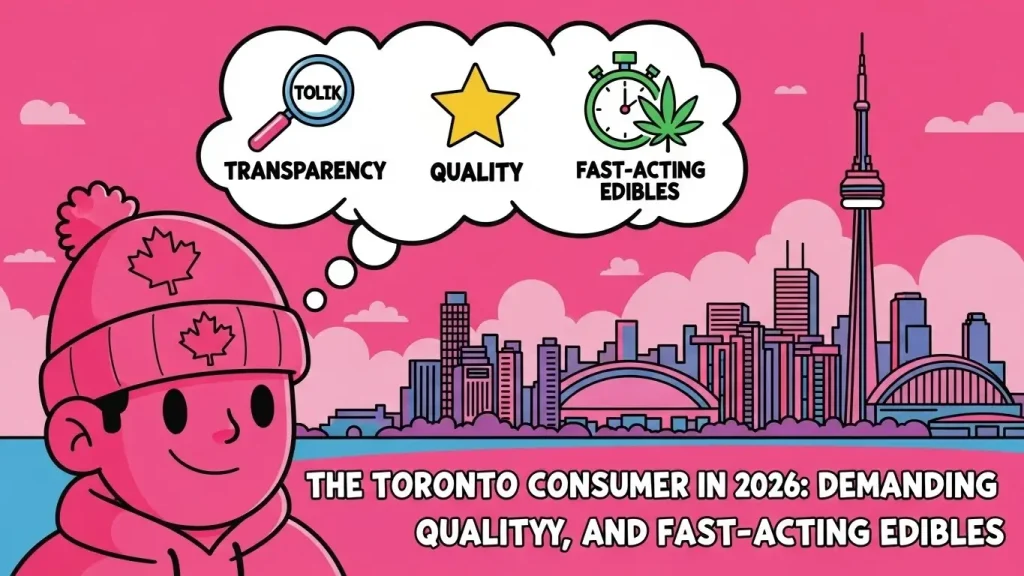
Welcome to your definitive guide for navigating Toronto’s complex cannabis market in 2026. If your brand messaging still leans on recreational highs or generic “premium quality” claims, you’re already speaking a language today’s Toronto consumer no longer understands. The landscape has shifted seismically. The modern consumer is more sophisticated, more demanding, and more deliberate with every dollar they spend. They’re not just buying a product; they’re investing in an experience, a solution, and a set of values that align with their own.
This isn’t a minor market adjustment—it’s a fundamental reset. Consumer behavior in 2026 is defined by what NielsenIQ calls “intentional consumption.” Every purchase must earn its place, delivering tangible value beyond intoxication. In Toronto, this translates to a buyer who meticulously researches online before visiting a store, prioritizes fast-acting edibles for their predictability, and scrutinizes your brand’s transparency and ethical sourcing with the same rigor they apply to their groceries. The question is no longer if your product gets them high, but how well it fits into their wellness routine, social life, and personal ethics.
This guide will unpack the key drivers behind this new consumer archetype and provide a data-driven playbook for brands ready to win in this demanding market. We’ll explore why fast-acting technology is now the benchmark for premium edibles, how blockchain can be your ultimate tool for building trust, and why your digital storefront is just as critical as your physical one.
The Transparency Imperative: Building Trust in an Era of Skepticism
Transparency is the new currency of consumer trust. In 2026, vague claims about quality or sustainability are immediately dismissed as greenwashing. The Toronto consumer has been conditioned by years of volatility and is inherently cautious. They don’t just want to know what’s in your product; they want to know where it came from, how it was made, and who made it. A founder’s story and a commitment to social impact aren’t nice-to-haves—they are powerful drivers of loyalty in a commoditizing market.
From Farm to Gummy: The Supply Chain Revolution
What does real transparency look like? It starts with radical clarity at every step:
- Ingredient Sourcing: Consumers are actively seeking cleaner labels, rejecting synthetic additives, and favoring products that preserve the plant’s natural compounds. They are asking: Are your ingredients organic? Vegan? Locally sourced? A 2026 consumer trend report highlights a major shift toward products with “cleaner ingredient lists” and “clearer labels”.
- Lab Testing & Potency Verification: Mandatory labels are just the starting point. Savvy consumers look for accessible, third-party lab results that verify not just THC/CBD content, but also the presence of minor cannabinoids (like CBN, CBG) and a full terpene profile.
- Ethical and Environmental Practices: Your environmental, social, and governance (ESG) stance is a deciding factor. Consumers reward brands that can demonstrate sustainable cultivation, fair labor practices, and a genuine commitment to community.
Blockchain: The Ultimate Trust Machine
For forward-thinking brands, technology provides the solution to the transparency challenge. Implementing blockchain-based traceability allows a consumer to scan a QR code on a package of gummies and see an immutable record of its journey. They can verify the harvest date of the cannabis, the date of extraction, the batch testing results, and the product’s journey through the supply chain. This level of verifiable proof transforms marketing claims into undeniable fact, building a fortress of trust around your brand. It directly addresses the consumer’s desire for “tangible benefits that simplify their life and align with their values”.
Fast-Acting Edibles: From Novelty to Non-Negotiable Premium Standard
If there is one product innovation defining the Toronto edible market in 2026, it’s the rise of fast-acting formulations. The era of guessing games is over. Consumers are no longer willing to wait 60-90 minutes, often leading to accidental overconsumption. They demand the control, predictability, and immediate feedback that fast-acting technology provides.
The Data Doesn’t Lie: A Willingness to Pay for Performance
Market research makes the commercial case undeniable. A 2025 analysis by BDSA and Azuca found that fast-acting edibles command a significant price premium while driving disproportionate loyalty.
Table: The Fast-Acting Premium & Performance
Corinne Butler, Senior VP at Azuca, states it plainly: “Fast-acting is no longer a nice-to-have, it’s the defining feature of premium edibles… Consumers will pay for performance”. This sentiment is echoed by industry leaders like Wana Brands, who note that fast-acting products are “becoming a new standard for premium edibles”.
Technology and Trust: The Science Behind the Speed
For the educated Toronto consumer, “fast-acting” must be more than a marketing slogan. They understand the basics of nanoemulsion and encapsulation technologies that increase cannabinoid bioavailability. Brands that win are those that educate consumers on how their technology works and, ideally, back it with pharmacokinetic studies. As noted by neuropharmacologist Stephanie Karzon Abrams, proving the technology with science “doesn’t have to be scientific language. Companies can translate it into language consumers understand”. This proof of performance is a powerful tool for converting skeptical shoppers into loyal advocates.
Quality Redefined: Beyond THC Percentage to Holistic Experience
The Toronto consumer has evolved past the ” THC percentage” arms race. While potency remains a factor, it is no longer the primary purchase driver. In 2026, quality is a multi-dimensional concept encompassing flavor, consistency, the “entourage effect,” and overall sensory experience.
The Sophisticated Palate: Flavor as a Leading Driver
Flavor has emerged as a critical battleground. Data from Abstrax shows that nearly 60% of cannabis consumers prioritize flavor above all else when choosing products like vapes, and this trend powerfully extends to edibles. The Toronto market, with its diverse cultural influences, shows a strong appetite for innovative and nostalgic flavor profiles. Think beyond berry and lemon; consumers are seeking exotic tropical fruits like yuzu and guava, sophisticated herbal notes, and complex, craft-inspired blends.
The Craft & “Full-Spectrum” Appeal
There is a growing appreciation for craft cannabis and full-spectrum products that deliver a richer, more authentic plant experience. As one retail executive noted, consumers are beginning to value “freshness, terpene profile, and overall batch consistency” much more highly. In British Columbia, small-batch craft releases continue to generate excitement, a trend that resonates in Toronto’s discerning market. This shift represents a move away from isolated distillates toward edibles that capture the nuanced synergy of the plant’s full cannabinoid and terpene profile, often marketed for specific functional outcomes like relaxation or focus.
The Digital-First Shopping Journey: From Discovery to Delivery
The path to purchase for the Toronto consumer in 2026 is digital, personalized, and demands seamless convenience. Nearly 80% of Americans live near a dispensary, but proximity alone doesn’t drive sales. Your digital footprint is your new storefront.
Online Menus, E-Commerce, and Frictionless Reordering
- Pre-Shop Research: 68% of consumers expect clear, updated online menus before ever visiting a store. Your website must be informative, easy to navigate, and optimized for mobile.
- E-Commerce & Delivery: The expectation for delivery and click-and-collect options is standard. Data shows that offering debit payments alone can boost transaction numbers by 59%, highlighting the demand for modern, frictionless payment solutions.
- Loyalty Through Convenience: 75% of consumers say easy reordering influences where they shop. Investing in subscription models and one-click reorder systems is an investment in customer lifetime value (LTV).
Personalization and Retail Media Networks (RMNs)
Generic marketing is dead. A staggering 87% of consumers are more likely to return to brands that offer personalized recommendations, yet only 29% feel they receive them. For cannabis brands, this means leveraging first-party data to tailor communications, offer relevant product suggestions, and provide post-purchase education.
Furthermore, the retail landscape itself is transforming. Retail Media Networks (RMNs)—where retailers sell advertising space on their digital properties—are reshaping commerce. For brands, this means the ability to deliver hyper-targeted ads to consumers at the crucial point of purchase decision, blending shopping with advertising seamlessly.
Your Actionable Playbook for Winning in Toronto 2026
Understanding the Toronto consumer is one thing; adapting your strategy to meet their demands is another. Here is a concise, actionable checklist to align your brand with the market’s future.
Table: Strategic Action Plan for 2026
The brands that will capture market share and build loyal followings are those that recognize this fundamental truth: The Toronto consumer in 2026 is not a passive buyer. They are an active partner seeking efficacy, authenticity, and alignment. By embracing transparency, championing fast-acting efficacy, redefining quality, and mastering the digital journey, you can do more than sell products—you can build a trusted community and a resilient, future-proof brand.
Frequently Asked Questions (FAQs)
How can brands understand consumer behavior in 2026?
Brands must adopt a data-first, empathetic approach. This means moving beyond sales data to integrate market research, social listening, and direct customer feedback. Focus on the “why” behind purchases: is it for sleep, social anxiety, or creative focus? Utilize tools like retail media network analytics and customer relationship management (CRM) platforms to build detailed personas. Remember, the core of 2026 behavior is intentional consumption—every product must solve a specific problem or enhance a specific moment.
How is consumer behavior changing in 2026?
Consumer behavior is shifting from recreational exploration to wellness-integrated, outcome-driven use. Key changes include:
- The Wellness Pivot: A majority now use cannabis primarily for relaxation and wellness, not just intoxication.
- Digital-Only Discovery: The purchase journey almost always begins online, with consumers researching menus and products before any store visit.
- Sophisticated Value Assessment: Consumers are “trading down” on commoditized items and “trading up” for premium experiences like fast-acting edibles or craft cannabis, showing a nuanced view of value.
- Demand for Personalization: Generic marketing fails. Consumers expect recommendations and communications tailored to their usage patterns and goals.
Are consumers demanding brand transparency?
Absolutely, yes. Transparency is a baseline expectation, not a competitive advantage. Consumers demand clear information on ingredients (preferring clean, natural lists), sourcing (ethical and sustainable), and lab-verified potency. They deeply distrust vague claims and reward brands with authentic, founder-led stories and verifiable proof of their practices. This demand for brand transparency is a direct response to broader economic uncertainty and a desire to make trustworthy, value-aligned purchases.
Are fast-acting products a new standard for premium edibles?
Yes, data confirms that fast-acting technology has redefined the premium edibles category. While they currently hold a smaller market share, fast-acting gummies outperform traditional edibles in key commercial metrics: they command a 31-39% price premium, generate 4-5 times more sales per stock-keeping unit (SKU), and are major loyalty drivers. Industry leaders assert that fast-acting is the “defining feature of premium edibles,” as consumers prioritize predictable effects and control over their experience.