
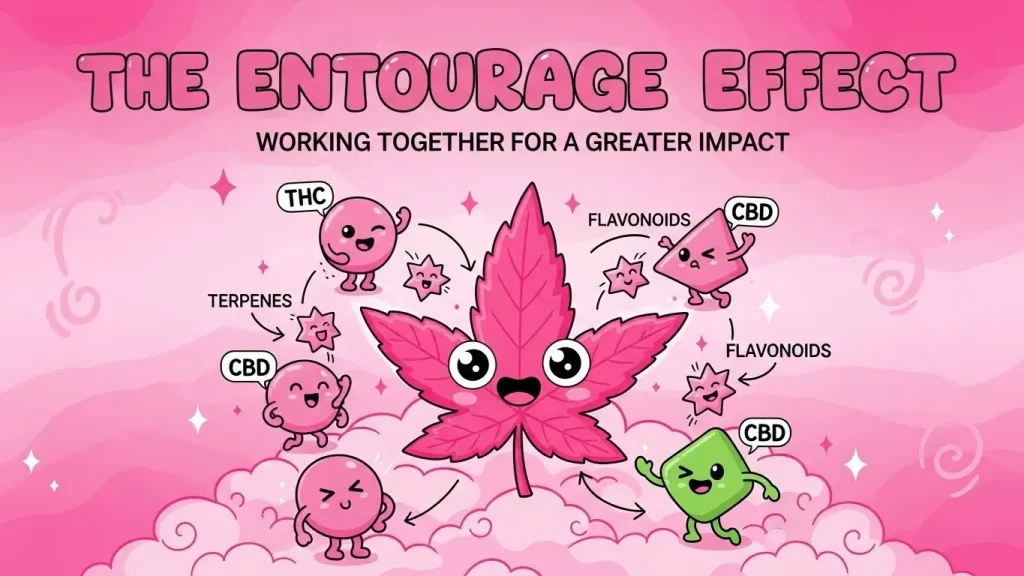
You’ve just placed an order for cannabis delivery. A simple transaction, right? Yet, while you’re waiting, a complex scientific phenomenon is at work, determining not just how you’ll feel, but why. Most consumers fixate on THC percentage, thinking it’s the sole key to their experience. But modern science and user experiences are revealing a more profound truth: the power lies in the entourage effect.
Simply put, the entourage effect is the theory that the cannabinoids, terpenes, and other compounds in the cannabis plant work better together than in isolation. This synergistic interaction can amplify therapeutic benefits, modulate psychoactive effects, and create a more nuanced and personalized outcome than any single compound could achieve alone.
While smoking flower provides one avenue to experience this synergy, today’s delivery menus offer a sophisticated array of products—from full-spectrum oils and terpene-rich concentrates to precisely dosed edibles—that are scientifically crafted to optimize and leverage the entourage effect. This article will decode the science behind this powerful concept and show you how to make smarter, more effective choices from your delivery app, moving beyond simple flower to products that truly work with your body.
Understanding the Key Players: Cannabinoids, Terpenes, and Synergy
To master the entourage effect, you must first know the team. The cannabis plant produces hundreds of chemical compounds, but two primary groups are responsible for its effects and the synergistic magic between them.
The Cannabinoids: The Primary Actors
Cannabinoids are the chemical compounds unique to cannabis that interact with your body’s endocannabinoid system (ECS)—a vast network of receptors involved in regulating mood, pain, sleep, appetite, and more. Think of your ECS as a master control panel for balance, and cannabinoids as the keys that can turn its functions up or down.
The two most famous cannabinoids are:
- THC (Tetrahydrocannabinol): The primary psychoactive compound, responsible for the “high.” It binds directly to ECS receptors.
- CBD (Cannabidiol): A non-psychoactive compound celebrated for its calming, anti-anxiety, and anti-inflammatory properties. It influences the ECS more indirectly.
However, the cast is much larger. Minor cannabinoids like CBG (Cannabigerol), CBN (Cannabinol), and THCV (Tetrahydrocannabivarin) each play unique roles, contributing to effects like focus, sedation, or appetite suppression. A 2023 review in Biomedicines noted that this complex polypharmacy—where multiple compounds act on multiple targets—is central to the proposed entourage effect.
The Terpenes: The Master Modulators
If cannabinoids are the actors, terpenes are the directors and set designers. These aromatic compounds give cannabis (and many other plants like lavender and citrus) its distinctive scent and flavor. But their role goes far beyond aroma; they are bioactive modulators.
Key terpenes and their proposed influences include:
- Myrcene: Earthy, musky. Often associated with relaxing, sedative effects. May help cannabinoids cross the blood-brain barrier more effectively.
- Limonene: Citrusy. Linked to elevated mood and stress relief.
- Pinene: Piney. Associated with alertness and memory retention.
- Caryophyllene: Spicy, peppery. Unique for also acting directly on the ECS like a cannabinoid, with potential anti-inflammatory benefits.
How the Entourage Effect Works: A Symphony, Not a Solo
The entourage effect is the synergistic outcome when these compounds interact. It’s not merely an additive effect (1+1=2); it’s a multiplicative or modulatory one (1+1=3). This synergy can happen in two key ways:
- Pharmacodynamic Interaction: Compounds influence each other’s effects on the body. For example, CBD can temper the anxious side effects of THC, allowing for a smoother psychoactive experience. Similarly, the terpene myrcene may enhance the sedative quality of certain cannabinoids.
- Pharmacokinetic Interaction: Compounds influence how the body processes each other. Some terpenes may act as bioenhancers, increasing the absorption or bioavailability of cannabinoids, meaning you need a lower dose for the same effect.
A foundational 1998 study by Ben-Shabat et al. first coined the term, observing that otherwise inactive compounds could potentiate the activity of the endocannabinoid 2-AG. Since then, researchers like Dr. Ethan Russo have advanced the concept, suggesting specific terpene-cannabinoid pairings can target conditions like anxiety, inflammation, and pain more effectively than single molecules.
Why Delivery Methods are Crucial for Harnessing the Entourage Effect
Your chosen method of consumption isn’t just about preference—it fundamentally determines how effectively you can engage the entourage effect. The bioavailability (how much of a compound enters your bloodstream), onset time, and duration of effects vary dramatically, influencing the synergy you experience.
Table: Comparing Cannabis Delivery Methods & Their Impact on the Entourage Effect
The Limitations of Smoking Flower
While smoking traditional flower is the most direct route to a strain’s natural chemical profile, it has drawbacks for optimizing the entourage effect. Combustion destroys a significant portion of delicate terpenes and cannabinoids before they ever reach you. Furthermore, the experience is largely dictated by the genetic profile of that single strain, offering less flexibility to tailor the synergistic outcome to your specific needs of the moment.
The Strategic Advantage of Modern Delivery Products
This is where your delivery order shines. Licensed producers now create products engineered for synergy:
- Full-Spectrum & Broad-Spectrum Extracts: These oils, tinctures, and edibles retain the complete cannabinoid and terpene profile of the plant (full-spectrum includes trace THC; broad-spectrum removes it). They are designed specifically to produce an entourage effect.
- Terpene-Infused Products: Some brands re-introduce specific terpene blends to products to target effects—like a “Calm” blend with linalool and myrcene, or a “Focus” blend with pinene and limonene.
- Precision Edibles: Unlike the unpredictable potency of a homemade pot brownie, lab-tested edibles offer exact milligram doses of THC, CBD, and other cannabinoids, allowing you to experiment with ratios known to produce specific synergistic outcomes (e.g., a 1:1 THC:CBD ratio for balanced relief).
Did You Know? When you eat an edible, your liver converts THC into 11-hydroxy-THC, a metabolite that is significantly more potent and has a longer-lasting psychoactive effect than inhaled THC. This is a prime example of how delivery method itself changes the chemical interaction within your body.
A Practical Guide: Choosing Delivery Products for Maximum Entourage Effect
Ready to apply this science? Use this actionable framework on your next delivery order to become a savvy consumer of synergy.
Step 1: Define Your Desired Outcome
Start with intention, not just a strain name. Are you seeking:
- Deep relaxation and sleep relief?
- Creative energy and focus?
- Pain and inflammation relief without heavy intoxication?
- Mild mood elevation and stress relief?
Your goal will determine the ideal cannabinoid and terpene profile.
Step 2: Decode the Product Label & Lab Report (COA)
Look beyond THC percentage. A quality product from a reputable delivery service will provide a Certificate of Analysis (COA). Scrutinize it for:
- Cannabinoid Profile: Does it include minor cannabinoids like CBG, CBN, or THCV alongside THC and CBD?
- Terpene Profile: Are specific terpenes listed with their concentrations? A product highlighting myrcene, linalool, or caryophyllene is signaling its intended effect.
- Spectrum Type: “Full-Spectrum” or “Whole-Plant Extract” are keywords indicating a product designed for the entourage effect.
Step 3: Match Products to Your Goal
Use the following cheat sheet to guide your cart:
- For Sleep & Heavy Relaxation: Seek indica-leaning full-spectrum products, edibles, or tinctures with high myrcene, linalool, and possibly CBN.
- For Energy & Focus: Look for sativa-leaning strains in vape cartridges or flower, or products with pinene, limonene, and THCV.
- For Anxiety & Stress: Prioritize products with balanced THC:CBD ratios (like 1:1, 1:4) and terpenes like limonene and caryophyllene. A broad-spectrum or CBD-dominant tincture can be excellent.
- For Pain & Inflammation: Full-spectrum products are key. Look for high caryophyllene, myrcene, and a mix of THC, CBD, and CBG. Topicals with these compounds can provide targeted relief.
Step 4: Start Low, Go Slow – Especially with Edibles
The golden rule of cannabis is doubly important when pursuing synergy. The entourage effect can make effects more profound. Begin with half the recommended dose, particularly with edibles, and wait the full onset time (at least 2 hours). You can always consume more, but you can’t consume less.
Debunking Myths and Navigating the Science
The entourage effect is a powerful concept, but it’s also a subject of scientific debate and marketing hype. It’s crucial to separate fact from fiction.
The Scientific Debate: Supported Theory or Marketing Term?
Some researchers argue that while plant compounds certainly interact, calling it a unique “entourage effect” is premature and used primarily for marketing. A 2023 scoping review in Biomedicines concluded that much of the clinical evidence still relies on anecdotal reports and that observed synergies can be explained by established pharmacological terms like “polypharmacy” and “bioenhancement”.
Critics point out that many claimed synergies haven’t been conclusively proven in large-scale, double-blind human trials. They urge caution and more research.
The Consensus from Anecdotal and Preclinical Evidence
Despite the debate, the weight of preclinical studies and overwhelming anecdotal evidence from patients and consumers is substantial. Many report that full-spectrum products provide more effective and nuanced relief than isolated CBD or synthetic THC.
The scientific community largely agrees that interactions occur; the debate is over the magnitude and mechanism of these interactions. For the consumer, the practical takeaway is that whole-plant medicine has a long history of efficacy, and choosing products that preserve the plant’s natural chemistry is a prudent strategy.
Conclusion: Elevate Your Experience with Knowledge
The journey from simply buying “weed” to strategically selecting cannabis for a specific entourage effect is the difference between hearing a single note and conducting a symphony. By understanding the roles of cannabinoids and terpenes, and how delivery methods like precisely formulated edibles, tinctures, and concentrates can optimize their synergy, you take control of your experience.
Your next delivery order is an opportunity. Look past the THC percentage. Seek out full-spectrum extracts, read the terpene profiles, and choose a consumption method that aligns with your desired onset and duration. Start with a low dose, be patient, and observe how the synergistic interplay makes you feel.
Ready to experiment? Share your experiences or questions about finding the perfect entourage effect product in the comments below. What synergistic blends have worked for you?
Frequently Asked Questions (FAQs) About the Entourage Effect
What is the entourage effect in simple terms?
The entourage effect is the theory that all the compounds in the cannabis plant—like cannabinoids (e.g., THC, CBD) and terpenes (aromatic oils)—work better together than they do alone. Their combined, synergistic action can create a more balanced, effective, and nuanced experience.
Is the entourage effect scientifically proven?
It is a well-supported theory with strong preclinical and pharmacological rationale, and a wealth of anecdotal evidence from consumers. However, some scientists argue that more large-scale, controlled human clinical trials are needed to definitively prove its mechanisms and scale. The interactions between plant compounds are widely accepted; the term itself is sometimes debated.
How can I get the entourage effect from products I order?
Choose full-spectrum or broad-spectrum products over isolates. These retain the plant’s natural mix of compounds. Read lab reports to find products with listed terpenes and multiple cannabinoids. Consumption methods like tinctures and well-crafted edibles are particularly effective for experiencing this synergy.
Do terpenes really change the high?
Yes. Terpenes are believed to modulate the effects of cannabinoids. For example, the terpene myrcene may promote relaxation and sedation, while limonene may uplift mood. They shape the character, flavor, and potential therapeutic direction of the high.
Are edibles or smoking better for the entourage effect?
Both can deliver it, but differently. Smoking/Vaping offers the plant’s immediate, natural profile but can degrade some compounds through heat. Edibles, especially full-spectrum ones, produce a longer-lasting, body-centric effect due to liver metabolism, which can create a uniquely powerful and prolonged synergistic experience.