
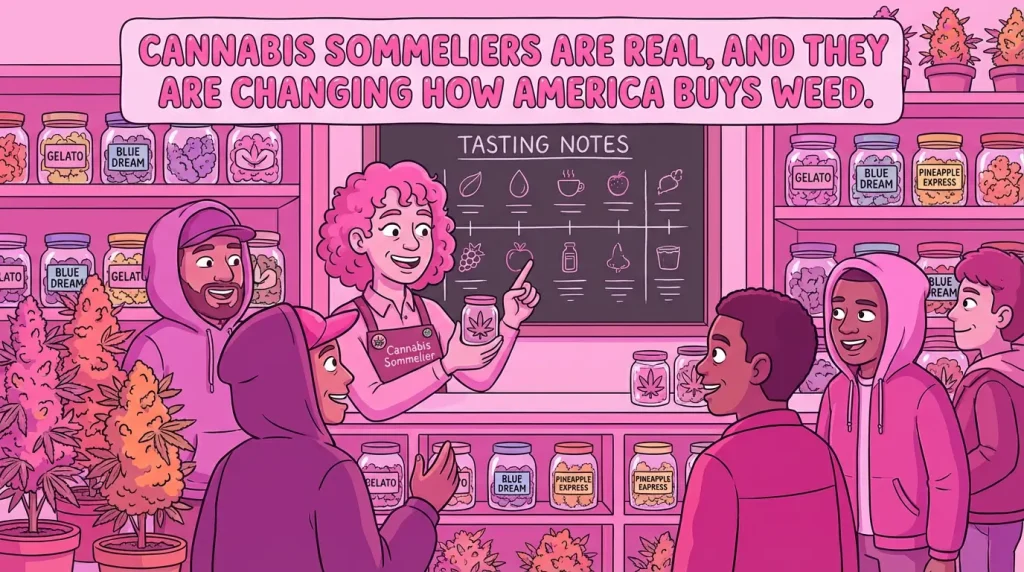
Imagine walking into a dispensary, not sure if you want a strain to help you sleep or one to fuel a hike. You’re faced with jars named “Blue Dream” and “GG4,” but the numbers on the label—THC percentages—all look the same. Where do you start?
This is exactly the problem that a new kind of expert is solving. Forget the stereotype of the guy behind the counter who just recommends the strongest thing on the shelf. Cannabis sommeliers are real, and they are bringing the precision of a wine tasting to the world of weed. They are the reason why your next trip to the dispensary might feel less like a drug deal and more like a visit to a Napa Valley tasting room.
But who are these people? How do they train? And most importantly, can they actually help you find a better high? Let’s dive into the world of the cannabis sommelier job description and explore how these experts are upgrading the entire industry.
What Exactly is a Cannabis Sommelier?
At its core, a cannabis sommelier is a trained product specialist. Just as a wine sommelier understands the difference between a Pinot Noir and a Cabernet Sauvignon based on soil, climate, and aging, a cannabis expert understands the nuances of the plant based on cultivation, genetics, and curing.
The role goes far beyond just smoking weed and giving a thumbs up or down. A professional in this field utilizes a Systematic Assessment Protocol to evaluate flower. This means they look at the structure of the bud, the integrity of the trichomes (those tiny crystal-like glands), and the “nose” or aroma of the plant. They are trained to identify specific terpenes—the aromatic compounds found in cannabis that not only dictate smell but also heavily influence the effects.
Have you ever wondered why two strains with the exact same THC percentage feel completely different? That is the work of terpenes. A sommelier knows that the terpene Myrcene promotes relaxation, while Limonene (which smells like citrus) can elevate mood and provide stress relief. By understanding this chemistry, they move the conversation away from just “how strong” a strain is to “how it will make you feel.”
The Formal Training: From Ganjier to Gastronomy
You can’t just wake up one day and call yourself a cannabis expert—at least, not if you want to work with top-tier brands. The industry is maturing, and with it, formal education is exploding. Leading cannabis brands have adopted the Ganjier Product Specialist program to provide their workforces with a comprehensive understanding of cannabis products .
This program is often compared to the rigorous certifications in the wine and beer world (like the Cicerone program for beer). It dives deep into:
- Comprehensive Product Knowledge: Understanding flower, pre-rolls, concentrates, edibles, tinctures, and topicals.
- Quality Assessment Skills: Using objective criteria to judge cannabis, moving past “it looks frosty” to actual structural integrity.
- Quality Preservation Techniques: Learning how humidity, light, and temperature affect cannabis from the storage room to the sale.
But the education doesn’t stop there. Academia is catching on. For those interested in the culinary side, institutions like SUNY Orange now offer programs like Culinary Cannabis Essentials: Infusion Techniques and Cannabis Mixology: Crafting Infused Beverages . These courses teach professionals how to work with the ingredient in a kitchen setting, ensuring proper emulsification and activation.
At the university level, schools like MSU Denver offer groundbreaking courses such as RST 2420: Cannabis in the Kitchen, where students learn the science, culture, and art of cooking with cannabis, often filmed in professional test kitchens with guest chefs from major edible brands . This isn’t just stoner food; it’s haute cuisine with a buzz.
What Does a Cannabis Sommelier Do All Day?
If you are intrigued by the cannabis sommelier job description, you might be surprised by how diverse the work is. It’s not just about smelling jars all day. Based on industry data, the role involves a mix of sensory evaluation and business strategy .
The Art of the Pairing and Recommendation
Just as you’d pair a bold Cabernet with a steak, a cannabis expert can pair a strain with an activity or a meal.
- For the Consumer: They act as a guide, listening to your needs. Are you an experienced user looking for creativity, or a newbie anxious about getting too high? They curate the experience.
- For the Chef: They consult on pairing cannabis strains with food or drink to enhance a dining experience, ensuring the flavors complement rather than clash.
The Business of Quality Control
Behind the scenes, many sommeliers work directly for cultivators or dispensaries to ensure inventory management and quality. They maintain accurate knowledge of the cannabis market, ensuring that what’s on the shelf is stored correctly and rotated to maintain freshness . They are the gatekeepers of quality, rejecting batches that don’t meet the standard.
The Science of Sales
Retailers are realizing that training staff in cannabis connoisseurship actually boosts the bottom line. When staff understand why a product is good, they are more likely to move premium inventory. According to industry experts, “When staff understand why product attributes matter, they’re more likely to use terpene data, cultivar notes and product details” to support recommendations . This builds trust, and in a market flooded with options, buying cannabis becomes about the conversation, not just the price tag.
The Salary: Is There Money in Terpenes?
So, can you make a living doing this? Absolutely. Like any skilled trade, expertise commands a premium.
While a traditional sommelier salary in a place like Weed, California, averages around $53,000, the cannabis-specific role often pays more due to the niche skill set required . General salary data for the role suggests that a Cannabis Sommelier can expect to earn between $45,000 and $75,000 annually, depending on experience and location . For those working in major markets or high-end consulting, the potential is even higher.
What factors influence the pay?
- Certification: Holding a credential from a recognized program like Ganjier can significantly boost your value.
- Location: Sommeliers in mature markets like California or Colorado often command higher wages.
- Role: A sommelier working in cannabis retail (a budtender with advanced training) might earn differently than one working as a consultant for a major edible brand.
How This is Changing the Way America Buys Weed
The rise of the cannabis sommelier signals a massive shift in consumer behavior. For years, the market was driven by THC potency. If it was over 25%, it must be good, right? Wrong.
We are now entering the era of the “Cannabonsieur.” These experts are educating the public that high THC doesn’t always equal a good experience. Sometimes it leads to anxiety or paranoia. Instead, they focus on the entourage effect—the synergy between cannabinoids (THC, CBD) and terpenes.
The Impact on Retail
Retailers are taking note. Cannabis sommeliers are real, and they are changing how America buys weed by transforming the retail environment. Dispensaries are hosting “meet the grower” nights and strain tastings where you can smell the difference between a Sativa and an Indica before you buy. This sensory marketing builds brand loyalty. If a sommelier recommends a specific brand based on its clean burn and complex flavor profile, you are more likely to buy that brand again, regardless of price fluctuations.
The Rise of THC Beverages
This expertise is also crucial in the booming sector of THC beverage sales. According to recent economic reports, THC beverage sales topped $1.1 billion in 2024, with a total potential market estimated between $9.9 billion and $14.9 billion .
- Cannabis mixology is a hot new trend. Experts are needed to ensure that the micro-emulsions (which make the water and oil-based cannabis mix) taste good and work fast.
- Cannabis beverage brands are making inroads with liquor chains like Total Wine, creating a need for staff who can explain these products to a customer base that usually buys beer and spirits .
- In bars and restaurants, from Houston to Chicago, THC-infused drinks are appearing on menus. As one bar manager noted, having a little variety in flavor and effect is key, and having staff who can guide the customer is essential for responsible consumption .
FAQs: Your Burning Questions About Cannabis Sommeliers
Do cannabis sommeliers actually get high at work?
Not usually. While they need to understand the effects, professional evaluation relies heavily on sight and smell. A sommelier might smell a dozen strains to check for mold, freshness, and terpene expression without smoking a single joint. In fact, many programs teach that smoking on the job clouds your judgment for the next sample.
What qualifications do I need to become one?
While a degree in horticulture or botany helps, the most direct path is through certification. Programs like the Ganjier Product Specialist program or courses in Cannabis Hospitality Management are designed to give you the credentials and knowledge needed to step into the industry . You also need to be of legal age (21+ in most states).
How do they choose the best strain for me?
They act like a therapist or a doctor. They will ask you questions: What is your experience level? What feeling are you trying to achieve? Do you prefer sweet flavors or earthy ones? Based on your answers, they will select a strain with the terpene profile and potency that matches your “intention.”
Are they just for flower, or do they know about edibles and vapes?
A true expert knows the entire menu. The cannabis product specialist training covers everything from the flower itself to the complex emulsions used in beverages and the extraction methods used for concentrates . They can guide you on whether you want a fast-acting nano-emulsified drink or a long-lasting traditional edible.
Why is this trend happening now?
It’s a combination of market saturation and legalization. As cannabis becomes legal in more states, the market is flooded with options. Consumers are overwhelmed. They are looking for a trusted guide to cut through the noise and help them find a product that is safe, effective, and enjoyable.
Conclusion: The Future is Flavorful
The next time you walk into a dispensary and feel lost, look for the expert. The ones who have gone through formal training aren’t just trying to move product; they are trying to curate your experience. Cannabis sommeliers are real, and they are building a bridge between the plant and the people who love it.
By focusing on terpenes, quality, and intentional consumption, they are dismantling the old stereotypes and building a new culture of appreciation. Whether you are a medical patient looking for consistent relief or a recreational user seeking a specific vibe, the age of the “Cannabonsieur” is here to make sure your next purchase is your best one yet.