
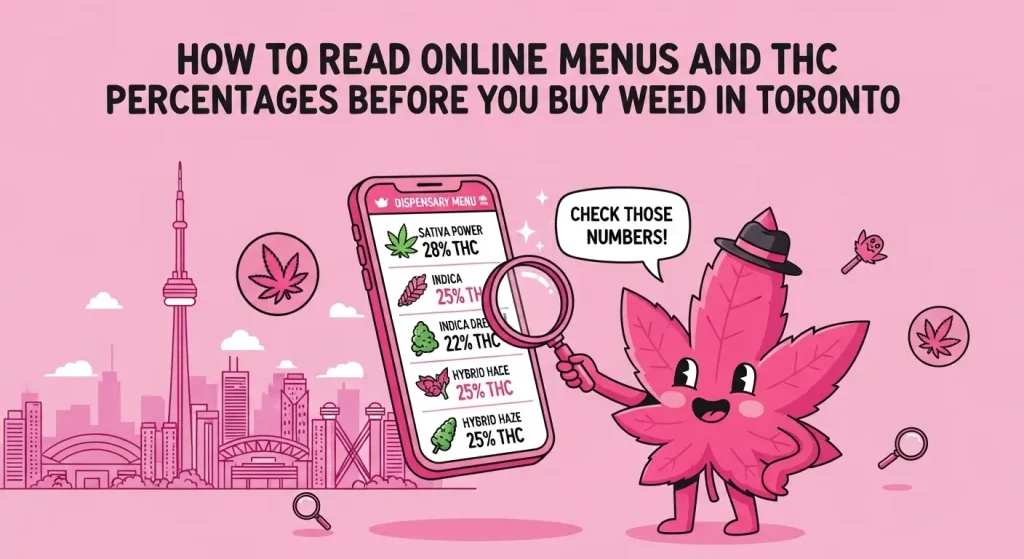
Navigating the digital shelves of a Toronto cannabis dispensary can be a confusing experience for new and experienced consumers alike. You’re faced with product names, flashy graphics, and, most importantly, a list of numbers that are supposed to tell you how strong the product is. Yet, the difference between Total THC vs THC on a product label or what it means when a pre-roll is listed as 20% THC can be a puzzle. Misunderstanding these numbers is one of the fastest ways to have an uncomfortable experience, whether you’re aiming for mild relaxation or targeted symptom relief. This guide is designed to give you the confidence of an expert shopper. We’ll break down exactly how to calculate THC percentage, explain the crucial distinction between THC mg g vs total THC, and show you how to make informed choices that align with your desired effects and safety.
Why Understanding Potency is Non-Negotiable in Toronto
Before diving into the numbers, it’s essential to understand why this knowledge is power. The legal cannabis market in Canada provides an unprecedented level of product information, but with it comes the responsibility to understand it. THC levels explained accurately are your first line of defense against overconsumption.
A report from Washington State highlights a critical trend: “A pattern of increasing concentrations of THC in cannabis flower existed before legalization, but commercial manufacturing accelerated this trend” . In practice, this means the average strength of products available in legal markets like Toronto’s is significantly higher than what was common decades ago. While this offers more choice, it also increases the risk of negative effects if you consume too much.
Understanding potency isn’t just about avoiding a bad time; it’s about efficacy and safety. Whether you’re using cannabis for recreation or to manage a condition like chronic pain or insomnia, knowing your dose is key to achieving consistent, predictable results.
Decoding the Label: THC, Total THC, and What It All Means
The most common point of confusion on an online menu is the cannabinoid listing. You’ll often see two separate values: THC and Total THC. These are not the same thing, and knowing the difference is fundamental.
The Science Behind Total THC
Fresh cannabis flower contains very little psychoactive Delta-9-THC. Instead, it contains high levels of Tetrahydrocannabinolic Acid (THCA), a non-psychoactive precursor compound. When you apply heat—through smoking, vaping, or cooking (decarboxylation)—THCA converts into the THC that produces effects.
The Total THC is a calculated value that estimates the maximum potential THC you could get from the product after it’s fully heated. The standard formula used by regulators, including in Connecticut, is:
Total THC = (THCA x 0.877) + THC .
The 0.877 multiplier accounts for the molecular weight lost during the conversion from THCA to THC. A product label might show:
- THC: 0.7%
- THCA: 18%
- Total THC: ~16.5% (calculated as (18% x 0.877) + 0.7%)
Key Takeaway: When evaluating flower or pre-rolls online in Toronto, always look at the Total THC value for the best estimate of its psychoactive strength . The “THC” value alone is misleading for unheated products.
THC mg/g vs. Percentage: Speaking the Same Language
Online menus in Toronto display potency in two main ways, depending on the product type:
- Percentage (%): Used for dried flower, pre-rolls, and concentrates. It represents the milligrams of THC per gram of product. For example, 20% THC means 200 mg of THC per gram of flower .
- Milligrams (mg): Used for edibles, oils, capsules, and beverages. This indicates the total active THC in the entire unit or serving . A 10 mg edible contains 10 mg of activated THC ready for consumption.
The following table clarifies how potency is displayed across different product types you’ll find in Toronto:
| Product Type | Typical Potency Measurement | Example Label | What It Means |
|---|---|---|---|
| Dried Flower / Pre-rolls | Percentage (%) | Total THC: 22% | 22% of the flower’s weight is potential THC (220 mg per gram). |
| Concentrates (Shatter, Wax) | Percentage (%) | THC: 75% | The extract is 75% pure THC (750 mg per gram). |
| Edibles (Gummies, Chocolates) | Milligrams (mg) per package/unit | THC: 10 mg per package | The entire edible contains 10 mg of activated THC. |
| Oils & Tinctures | Milligrams (mg) per milliliter | THC: 25 mg/mL | One milliliter of the oil contains 25 mg of THC. |
Your Practical Guide to Calculating Potency and Dose
Now that you can read the label, let’s apply that knowledge. How do you go from a percentage on a screen to understanding your actual dose?
How to Calculate THC Percentage and Milligrams
You can be your own THC mg to percentage calculator with some simple math. This is vital for comparing products or figuring out how much to consume.
1. For Flower (Percentage to Milligrams):
Want to know how many milligrams of THC are in that 3.5-gram (1/8 ounce) jar of 18% Total THC flower?
- Convert grams to milligrams: 3.5 g = 3,500 mg.
- Multiply by the THC percentage (as a decimal): 3,500 mg x 0.18 = 630 mg.
- Result: That entire 3.5-gram portion contains approximately 630 mg of potential THC.
2. For DIY/Understanding Servings (Milligrams to Percentage):
If you’re making edibles and a recipe calls for cannabis with 15% THC, but you only know your jar contains 450 mg of Total THC, what’s the weight?
- Use the formula: Potency (%) = (Total mg of THC ÷ Total weight in mg) x 100 .
- If you have 450 mg of THC and need 15% (0.15) potency: (450 mg) / 0.15 = 3,000 mg (or 3 grams).
What is a “High” THC Percentage? Setting Expectations
With THC levels explained, you need context. What is considered “strong”?
- Low THC: Generally below 15%. A great starting point for new consumers .
- Moderate THC: Between 15% – 20%. This is the average range for many quality flowers in the legal market .
- High THC: Anything above 20% is typically considered high-potency flower and should be approached with respect, especially if you have lower tolerance . Products with Total THC above 25-30% are exceptionally potent.
Remember, a “high” percentage doesn’t automatically mean a “better” product. The effects depend heavily on the THC vs CBD ratio and the terpene profile.
Beyond THC: The Critical Role of CBD and Terpenes
Focusing solely on THC is like judging a recipe by its chili powder content—you miss the full flavor and effect. The THC vs CBD balance is perhaps the most important factor after potency itself.
- THC-Dominant: Psychoactive, euphoric, and stimulating. Can help with pain, insomnia, and nausea but may cause anxiety in some .
- CBD-Dominant: Non-psychoactive, calming, and counteracts anxiety. Known for anti-inflammatory and anti-anxiety properties .
- Balanced (1:1, 2:1, etc.): Often considered the “therapeutic sweet spot.” CBD can mitigate the anxious side effects of THC while contributing its own benefits, leading to a clearer, more functional experience .
Public health guidance from Ottawa Public Health recommends that new consumers, in particular, “choose products with low Total THC and an equal or higher amount of Total CBD” .
Terpenes are aromatic compounds that give cannabis its distinctive smell (like citrus, pine, or lavender). Emerging research suggests they work synergistically with cannabinoids to modulate effects—a theory known as the “entourage effect.” A strain with myrcene (earthy) may promote sedation, while one with limonene (citrus) might be more uplifting.
Recognizing and Avoiding Potential Weed Side Effects
Informed consumption is safe consumption. Being aware of potential weed side effects allows you to dose appropriately and respond calmly if they occur.
Common Short-Term Effects (often dose-dependent):
- Dry mouth, red eyes, increased heart rate .
- Dizziness, temporary anxiety, or paranoia .
- Impaired short-term memory, coordination, and reaction time .
What to do if you feel too high:
- Don’t panic. Remind yourself the feeling is temporary and will pass.
- Find a calm environment. Sit or lie down in a quiet, familiar place.
- Hydrate and snack. Drink water and eat some simple carbohydrates (like fruit or crackers). Black pepper (chew on a few corns) is a famous folk remedy, as the terpene beta-caryophyllene may have calming effects.
- Try CBD. If available, take some CBD oil or use a CBD-dominant product. CBD can counteract the psychoactive effects of THC.
- Sleep it off. If possible, taking a nap is often the fastest solution.
Long-Term Considerations:
Heavy, frequent use of high-THC products, particularly starting in adolescence, has been associated with risks like Cannabis Use Disorder (affecting about 1 in 10 adult users), increased risk of psychosis in predisposed individuals, and impacts on respiratory health from smoking . Always source your cannabis from licensed Toronto retailers to ensure it’s free from contaminants like pesticides or molds .
A Step-by-Step Action Plan for Your Next Online Order
Let’s synthesize everything into a foolproof checklist for shopping on a Toronto dispensary website.
- Identify Your Goal: Are you seeking relaxation, creativity, pain relief, or sleep? Your goal will guide your choice of strain and THC:CBD ratio.
- Filter by Product Type: Know what form you want (flower, edible, vape, etc.).
- Decode the Cannabinoids: Always look for “Total THC” on flower and pre-rolls. For other products, note the mg per serving and servings per package.
- Seek Balance: If you’re new or prone to anxiety, actively look for products with a significant CBD content (a 1:1 or 2:1 CBD:THC ratio is an excellent start).
- Check the Terpenes: Many reputable brands now list dominant terpenes. Use this to fine-tune your selection (e.g., limonene for an uplift, myrcene for calm).
- Start Low & Go Slow: This is the golden rule. If trying a new, higher-potency product, consume half (or less) of your usual amount and wait at least 60-90 minutes for edibles, or 15 minutes for inhaled products, before considering more.
Final Recommendations for the Informed Toronto Consumer
The legal market in Toronto offers quality, consistency, and information. Your job is to use that information. Don’t get seduced by the highest THC percentage; the “best” product is the one that delivers the desired effect with the comfort and safety you require.
When in doubt, use the THC mg to percentage calculator principles to demystify the numbers. Pay close attention to the Total THC vs THC distinction to avoid surprises. And never underestimate the moderating power of CBD in the THC vs CBD dynamic.
By approaching online menus with this knowledge, you transform from a passive browser into an empowered consumer, ready to make smart, safe, and satisfying choices for your cannabis experience in Toronto.
Frequently Asked Questions (FAQs)
Q: I see discussions on “Thc vs total thc reddit” forums. What’s the simple explanation?
A: The simple explanation is that “THC” on a label typically refers to the amount of active Delta-9-THC already in the product. “Total THC” is a calculated estimate of all the potential active THC, including what will be converted from the non-psychoactive THCA when you heat it. For dried flower, Total THC is the number that matters most .
Q: How do I use a THC mg to percentage calculator for homemade edibles?
A: You need three pieces of information: 1) The weight of your cannabis in grams, 2) its Total THC percentage, and 3) the amount of butter/oil you’re infusing. First, calculate total THC mg (Weight in mg x THC%). Then, divide that by the number of servings your recipe makes to find the mg of THC per serving. Many online calculators automate this .
Q: Are there different weed side effects with high-THC concentrates vs. flower?
A: Yes. Concentrates (like shatter, wax) with potencies of 60-90% THC deliver a much more intense effect much faster. This significantly increases the risk of overconsumption, leading to severe anxiety, paranoia, and heightened physical side effects like rapid heart rate. They should only be used by very experienced consumers .
Q: For a beginner in Toronto, what’s a safe starting point with THC levels explained?
A: Public health advice is to “start with 1 or 2 puffs of 10% THC or less” if smoking/vaping, or with “2.5 mg THC or less” if consuming edibles . Look for flower with a Total THC under 15% or products with a balanced THC vs CBD ratio to minimize risk while you learn your tolerance.
Q: What does the THC percentage mean for different product types?
A: For flower, it’s a percentage of weight (e.g., 20% = 200mg THC per gram). For edibles and oils, potency is listed in total milligrams (mg) per package or serving. A 10 mg edible contains 10 mg of activated THC, which is roughly equivalent to consuming 0.05 grams (50 mg) of 20% THC flower, but with a much longer-lasting and potentially stronger bodily effect .